Je suis triste

Leave a comment

je-suis-charlie

This morning, after a lovely walk with a friend, I came home and met with the horror of the attack in Paris in the news.

Not much more that I can say. I volunteer facilitating conflict resolution workshops in prisons and have talked to many inmates who have done terrible things in the past and are working hard to turn their lives around. It is my firm belief that there is humanity in all of us.

But days like this, it is hard.

(New) thoughts & worries about online cheating

Leave a comment

Yes, I am thinking.

I am reading this article with trepidation mixed with relief: What One College Did to Crack Down on Shoddy Transfer Credits – Athletics – The Chronicle of Higher Education. This comes together with another article about the gory details of the widespread schemes to “help” athletes meet the NCAA requirements.

My thoughts?

  1. Good for you, Mt. San Antonio! They did their homework, they compared courses, and they took a stance. In my position as course lead for a GenEd biology course I have received occasional request for course transfers, and trust me it takes its time and effort.
  2. I am so glad that I am not responsible for math courses.
  3. Feeling good that I put my foot down and implemented randomized questions in online exams.
  4. Hm. Is this something I should worry about?

While these articles are more focused on schemes related to athletes, for me it is another warning sign. I have been aware for quite a while that one can buy complete assignments online. As others, I was also shocked by the Chronicle article about the shadow scholar (and here he is coming out). In that update (more than 2 years ago) many in the comment thread talked about the “industry trend.”

A little while ago I was referred to the website Fiverr as a place to get technical stuff done (for example, a website design etc). Poking around I found a number of references to “I will do your CS homework for you” and with a premonition, typed in “biology.”

Well check out for yourself: the results of the search.

Not good.

How I learned to stop hating the bragging list…

2 Comments

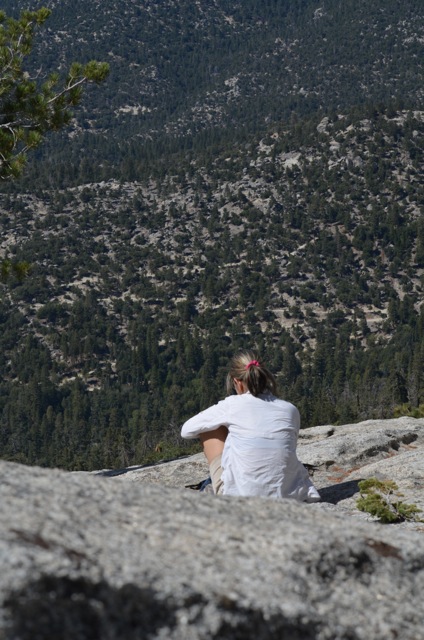
Looking down from a trail close to Idyllwild. Patterns can be seen better in the distance (geographical or time).

Looking down from a trail close to Idyllwild. Patterns can be seen better in the distance (geographical or time).

…and embraced it instead.

Some time last summer a directive came down from the powers to be, that each faculty member should submit every month a list of activities or achievements outside the planned or required activities. A collective groan was the response, and explanations were provided promptly that the lists would be aggregated and the highlights were to become “bragging points” for each school. Lists had to be bullet-pointed and divided into the three academic areas: teaching, research, and service.

After a month or so of last minute scrambling, I started a Google document and every time I did something outside my official plan (sending a letter of support for an initiative, meeting and networking, getting a presentation approved, joining a society, giving extra support for a disabled student, etc) I typed it into the document right away. I put a reminder into my calendar about sending it in time, and soon it faded away to become one more routine action of the month.

February is merit request letter submission time. As I sent this morning the December list, I scrolled up the document all the way back to June and realized that all needed for the letter was there! The list not only reflected specific actions and achievements, but also recorded the process- one month I was applying for something (which meant I spent some time writing in frenzy) and a few months later I had it accepted. Monthly small connections, meetings, and events came together as a sustained outreach effort. By recording every little thing month after month, I was able to have not only all the facts, but also see the pattern of my activity over longer periods in time.

What else to say? Lists are good. Bragging lists are useful. Admins sometimes come with pretty good ideas. Google documents rock.

The Post-It approach

1 Comment

2015-01-05 06.51.51

My morning desk with last night’s Post-its.

Another of my goals this time is to blog more continuously. Yesterday I followed a Twitter chat tagged #blogchat and the resounding advice I got was that the more you blog the easier it gets (as everything in life). And a bit like mentioned in my previous post, there are days for deep reflections and there are days for quickies. And today is a quickie day.

The first job I held after my postdoc was with a small biotech company in San Diego. The culture shock took place at many levels, but what affected me most from a practical point of view was the limitation of time to work. There was no way to do labwork during the weekends, and lab data had to be stored and processed in the company computers as well as input in a traditional countersigned lab notebook. Even evening work was discouraged!

At one level that was quite liberating- I could not work from home, so I actually worked Monday to Friday only. On the other hand, I had to be very organized and very efficient- if I blew my early week experiment that was it: a whole week was lost.

Enter the Post-it method.

Fridays became the “scrapbooking day,” e.g. the day when we would work on the lab notebook, analyzing the data, and then printing, cutting out, and glueing the graphs for the coming week’s dreaded lab meeting. That was also the day of preparation for next week’s experiments. I prepared all reagents that I could make in advance, and made detailed lists of fresh reagents I had to make on the spot. I actually calculated the exact volumes or weights I had to use, step by step.

Before leaving on Friday afternoon, I made a set of Post-its with the first tasks for Monday morning. Again, it was quite detailed: put the trypsin in the incubator, take 400 ul of the XYZ stock and add to 600 ul of whatever, turn on the instrument.

Silly as it might have seemed on a Friday afternoon, they were life-savers on Monday mornings after the hiatus of a complete weekend.

I still use Post-its a lot. In the evening, or whenever I am finished for the day with my tasks, I prepare my set of Post-its with specific directions on what to do next morning. It saves me the time of thinking through the tasks.

Do you have any other little tricks that help your productivity? Please share in the comments!

Academic skills- a moving target

Leave a comment

This blog post is related to my previous reflection on “getting things done” and prioritizing. It refers to my experience in a primarily teaching private comprehensive university.
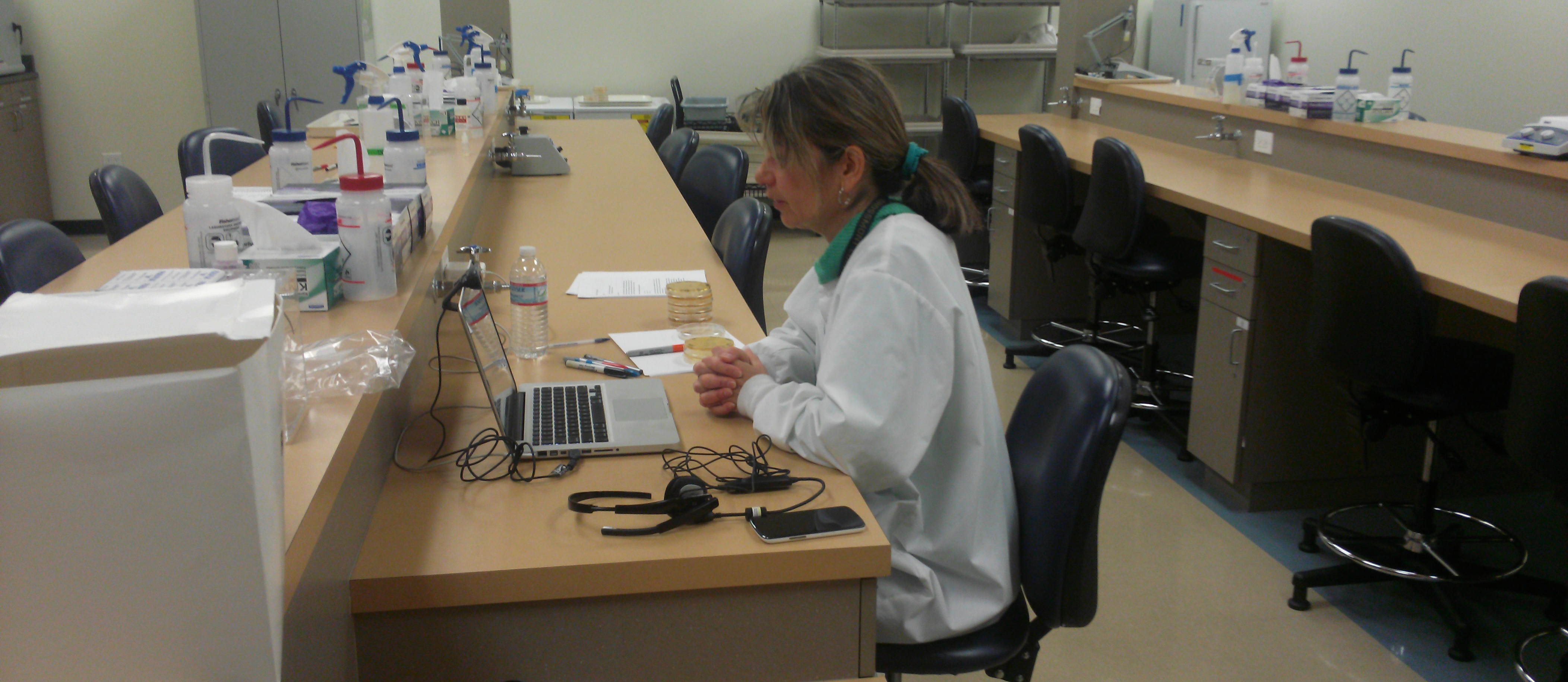
Skyping with middle schools about genetics. Very cool experience- also a bit of stretch on my abilities.

Skyping with middle school kids about genetics. Very cool experience- also a bit of stretch on my abilities.

As I look back and reflect on the many things that I had to learn just to keep afloat, a predominant group of my students come to mind.

Since I started teaching in the US in 2005, a large proportion of my students have been pre-nursing students. Over the years, I have talked to many of them about their plans and goals, and kept track of their journeys either personally or through social networking.

I feel for many of them. Expectations for nursing have shifted dramatically over the past years, from the Gold Rush of the nursing shortage in California to the recent reports of hiring bottlenecks and the sad plight of many new grads. Along the way, requirements and pre-requisites changed, making the goal a moving target. Whatever was an extra skill last year may have become required this year, and students had to adapt and scramble along the way.

It is expected, of course, especially in very technical fields, that the skills that were competitive before quickly become obsolete, and people has to keep acquiring new skills and competencies just to keep up. But it seems to me that the skill set required for a science educator has broadened considerably in just a few years.

Consider online teaching. The first time I taught an online course was in 2007, without really knowing how to teach online. Over the next years I learned quite a bit, and currently consider myself knowledgeable. During this time, being familiar with online platforms has transitioned from being slightly suspicious to something useful, and these days it is almost required.

What about education of science per se? It feels like a revolution has taken place in just a few years in how science is supposed to be taught. It is great and exciting and empowering…but it takes a while to learn about learning theories and assessment modalities. And Bloom’s taxonomy.

To boot add all the outreach and marketing skills. In my previous posting I referred to exciting side projects that fizzled- most of those were outreach projects, trying to establish partnerships and collaborations. Outreach takes time, effort, and skills. Oh and personality. As an introvert, reaching out to strangers drains me mentally and emotionally.  But even writing emails and coordinating conference calls take time and effort.

Now to the bright side. Personally, I have always been more the “Jack of all trades” kind, so most of the time I like learning new things. And looking back, it have been mainly those leaps of faith and new adventures that guided me to the next door opening, the next mentor, the next opportunity.

There is a lot lately out there about the alt-ac careers, the many “soft skills” that academics need to learn to succeed in other areas. But even in academia, there is a lot of pressure to acquire new skills besides the traditional research/writing knowledge. And it is a fine balance. Although my position is mainly a teaching position, I do lab research and hope to go back to publish hard science some time soon. How much more I gain in my teaching practice by learning a new approach if it eats into my precious time to run certain experiments? How much I gain by trying to network for a collaboration if it will affect my class prep time?

I do not do New Year’s resolutions…but some time last December I decided to really focus on a few priorities (research and publishing on the top) and try to 1) avoid the siren song of new and cool ideas, and 2) say “NO” more often. On the last day of a mostly nice holiday break (not counting a really bad bout of the flu) I am bracing myself for the return of insanity starting tomorrow. But I hope to stand firm. I will try, at least!

How to get things done, one list item at a time

2 Comments

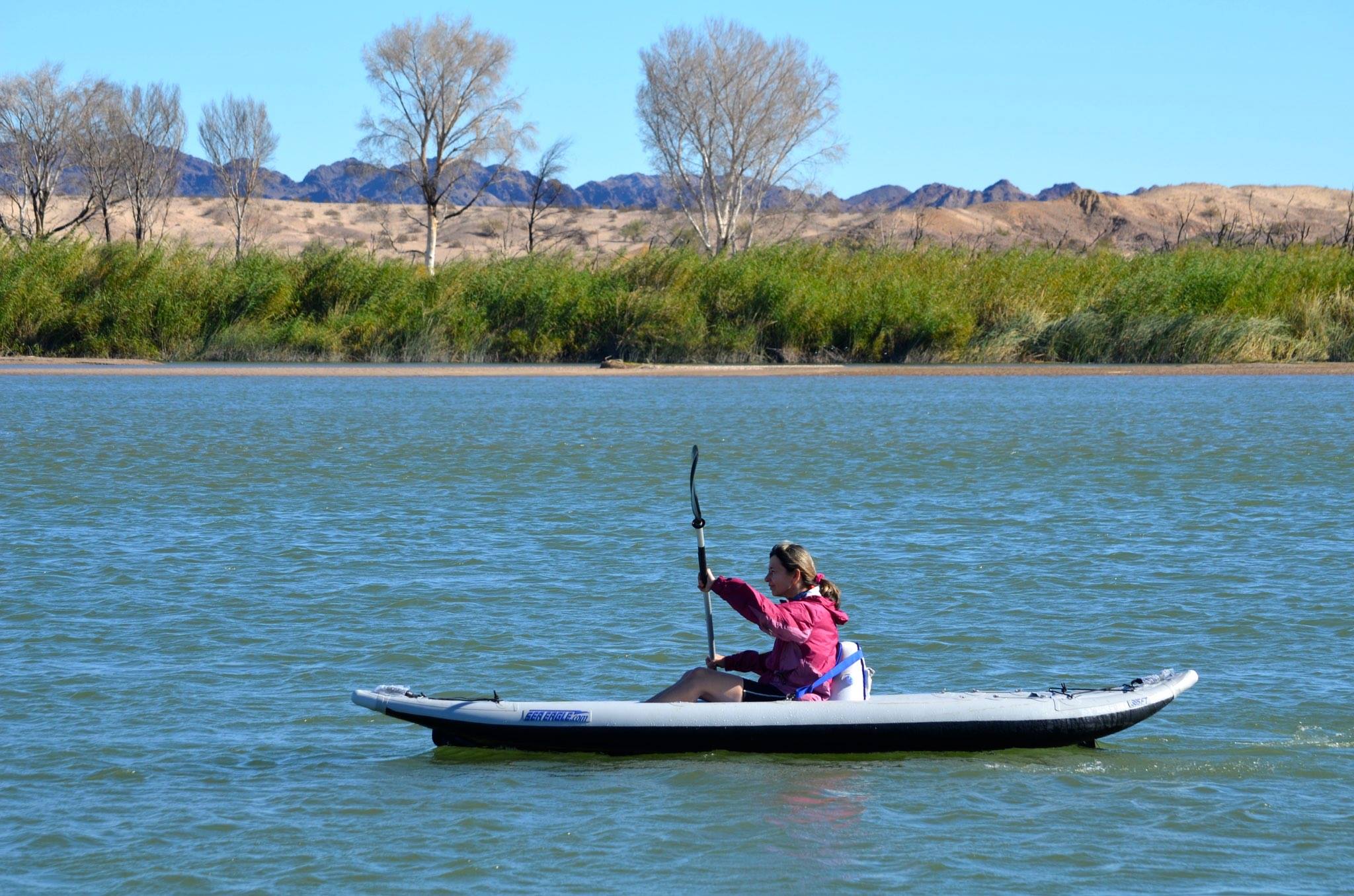
Here I am calculating the current of the Colorado River before kayaking.

Here I am calculating the current of the Colorado River before kayaking.

Since 2011 I made it a tradition to put together a “Book of the year” of pictures in iPhoto and have it printed as a family present. As I sat before Christmas selecting this year’s pictures it was obvious that they only showed a minor part of 2014: pictures of travels and visits, moving, the new cat…all nice and colorful, but the crazy grind of work and conferences and trips was missing. Which is a good thing. 2014 was a good year, but it was also an overwhelming, saturated, super busy year.

Some time in October I had an epiphany (mind you, this is not the first time). I realized  that I had neglected once more the “important” stuff such as my own research and writing in order to support a number of cool and potentially exciting initiatives. The majority of those plans fizzled, and there I was again, looking at unfulfilled timelines and datasets waiting to be tackled. Not to mention two interesting MOOCs I was taking, a business trip to Europe, and being thrown in two academic committees.  I was overloaded with meetings and conference calls. It was too much.

Fast forward to today, January 1st 2015. While craziness will resume next Monday, I have already set up the two online courses I will be teaching next, got started working on the February AAAS poster, have advanced on my manuscript, caught up with correspondence, and have finally found myself in that state of mind where most of the mental clutter has been cleared out so I am getting creative thoughts. Such a joy!

The secret was 1) having a deadline, 2) task lists, and 3) always completing something, even if a small chunk. I knew I had to be done with a number of things before Christmas because we were leaving town to go camping (= no internet, no work possibility). I made lists and I forced myself to work on those lists day after day, evening after evening. Chunking helped both in the practical and emotional sense. “Working on the AAAS poster” sounds intimidating. Looking up the instructions, deciding on a template, putting in the title and authors’ names, adding a background and saving it as a draft is necessary, took me less than one hour, and gave me a sense of fulfillment. Just like the days when I was writing my Ph.D. thesis, there were days to write the Discussion, and days to write Materials and Methods, but one had to write every day.

paddling the river

The current was strong, and it was also windy. I had to paddle steadily until I got to move upstream. Pretty much like work…

I got lots done before leaving for a short trip to the Colorado River for camping and kayaking. It was great and exhilarating, and it wiped out most of my work-related thoughts. Home again, as I return slowly to my list, it is my intention to keep the same discipline, and get things done slowly and steadily, one item at a time. Maybe 2015 will be less stressful…fingers crossed!

Newer Entries

CUREing Ocean Plastics

STEM education exploring ocean plastic pollution

about flexible, distance and online learning (FDOL)

FDOL, an open course using COOL FISh

Main Admin Site for the WPVIP multisite

This multisite hosts public sites for Parse.ly and WordPress VIP

#Microjc

An Online Summer Book Club of Science

barralopolis

Teaching and learning reflections around science education

Disrupted Physician

The Physician Wellness Movement and Illegitimate Authority: The Need for Revolt and Reconstruction

The Blog of Author Tim Ferriss

Tim Ferriss is the author of five #1 New York Times bestsellers and host of The Tim Ferriss Show podcast.

Here is Havana

A blog written by the gringa next door

Storyshucker

A blog full of humorous and poignant observations.

Jung's Biology Blog

Teaching biology; bioinformatics; PSMs; academia, openteaching, openlearning

blogruedadelavida

Reflexiones sobre asuntos variados, desde criminologia hasta artes ocultas.

Humanitarian Cafe

Think Outside the Box

Small Pond Science

Research, teaching, and mentorship in the sciences

Small Things Considered

Teaching and learning reflections around science education

1 Year and a 100 Books

No two people read the same book