Recap 2: the NSF grant

Leave a comment

It takes a village to raise a child, and it takes a lot of people working together to get a grant. The fact that three years after starting a project basically from scratch we were awarded a NSF grant is quite a feat by any standards.

This was not our first, of course. We had applied for a couple of private foundations and to the California Sea Grant. One very important lesson from the failed applications was to request a call (if possible) with the grant administrators to learn what went wrong. Often we had the “who dis” problem, grant agencies not knowing us, and were recommended to seek collaborations with more seasoned institutions. One time, when we wrote our first course-based undergraduate research experience (CURE) grant, we were told that more details were needed regarding the mechanics of the education research part. That was a huge help for the NSF grant.

For a timeline of how we started and expanded, there is our experiment.com website, where we got some crowdfunding and have kept updates. A relevant milestone was the collaboration with Dr. Jeff Bowman at Scripps, thanks to a connection with Dr. Emelia DeForce.

My university has an excellent grant specialist, who was and is in charge of all the boring details including the official paperwork and the gory budget forms. But a grant starts and ends with the narrative, and that was a tour de force. Especially because we had basically only one week to write it!

It was helpful that both Rachel Simmons and I are night owls so we were writing into the wee hours, often at the same time using Dropbox and Word online. Once we had a working draft, excellent collaborators and a writing consultant smoothed out the wrinkles and ensured we stayed within the page limits. Finding an external evaluator willing to write an evaluation plan in three days was also epic (short version: networking is critical).

The rest of it is history- waiting months, hearing back, rushing to get IRB approvals and write revisions. And then the news.

We have been rolling now officially since October. Three groups of students have completed the experience, new reagents are accumulating in the lab, and there is a paid research student in the lab. A week ago I had the pleasure to visit University of Texas Rio Grande Valley, where a group of grantees presented their project and compared notes in a STEM meeting. It was heartwarming to be with a group of educators who feel very strongly about widening access to STEM for all students, especially Hispanics.
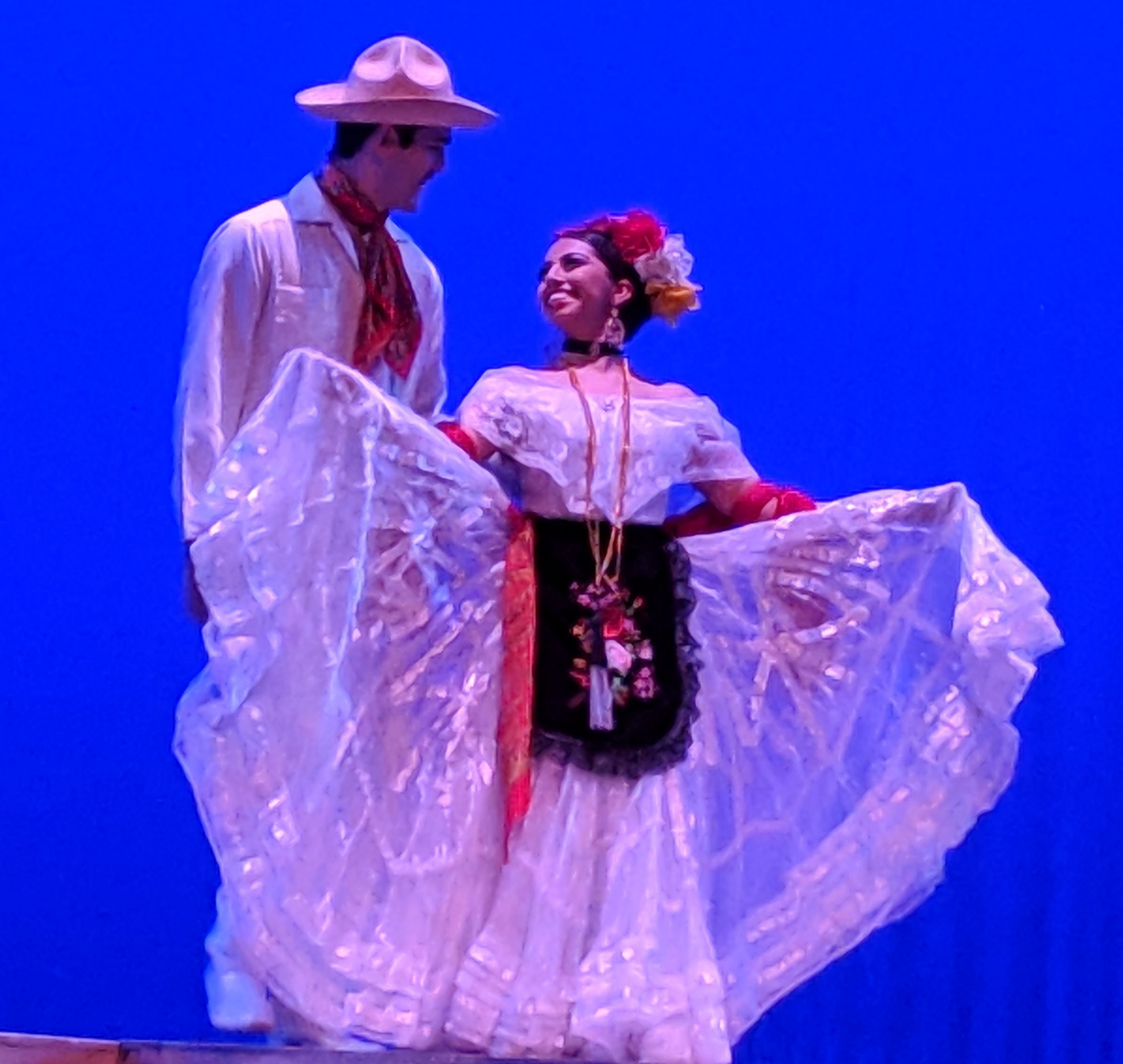
Folkloric Dance performance by the UTRGV students in McAllen, TX

Recap 1: the paper(s)

1 Comment

When I returned to blogging after 4 years, I had a small list of accomplishments/tasks that happened since 2015 I wanted to share. So here is the first in a series of (hopefully) short recaps of the past few years.

While my institution is mainly a teaching one, one is expected to do research and publish. Way back in 2015 I blogged about “number crunching.” That study, a retrospective study of an online course redesign was the beginning of a synergistic and fruitful collaboration with my colleague Dr. Rachel Simmons. It was published in the Journal of Research In Innovative Teaching, a semi-internal journal by my university. The peer review was surprisingly stringent, and it was a good exercise for what was yet to come.

Some time in 2015, the Dean of my school announced small internal grants for “teaching pairs” who wanted to try out novel teaching approaches. I teamed up with another colleague, Dr. Veronica Ardi, in “flipping” a majors general biology course. That project made it through the wringer of the ASM Biology Scholars Program, meaning it received plenty of amazing feedback, critiques, and recommendations while still happening (so there was time and room to improve it). The data were rich and very complex, but thanks to Rachel’s magical data fingers, they started to make sense.

Fast forward 2 years, and the results of that study were published in CBE Life Sciences Education. It was a long and winding road, with sections put in, removed, put again, and finally removed. And oh so many versions. It is known the grit and stubbornness required to be published…and we had it.

Now what I learned from that experience is…1) Collect your data considering the data format your numbers person is going to use. We started collecting data in a certain way, and with every iteration I had to copy/paste/transpose to make them the right format for the statistics program. It was painful, but it made me intimately connected to the raw data and soon I could spot errors right away, 2) Let sit the latest revision for several days before sending it away, so you get out of the tunnel vision stage, 3) Practice and perfect the art of being diplomatic in writing when people doubt your statistics or experimental design, and 4) Help the reviewers. And what I mean by that…make their job easier. Both to review the original paper and to read the revision. Not to mention minimizing noise such as typos and grammar issues, which can usually be done following #2 above.

So that is for today. I am trying to catch up before ONL191 gets full speed next week!

I am back!

4 Comments

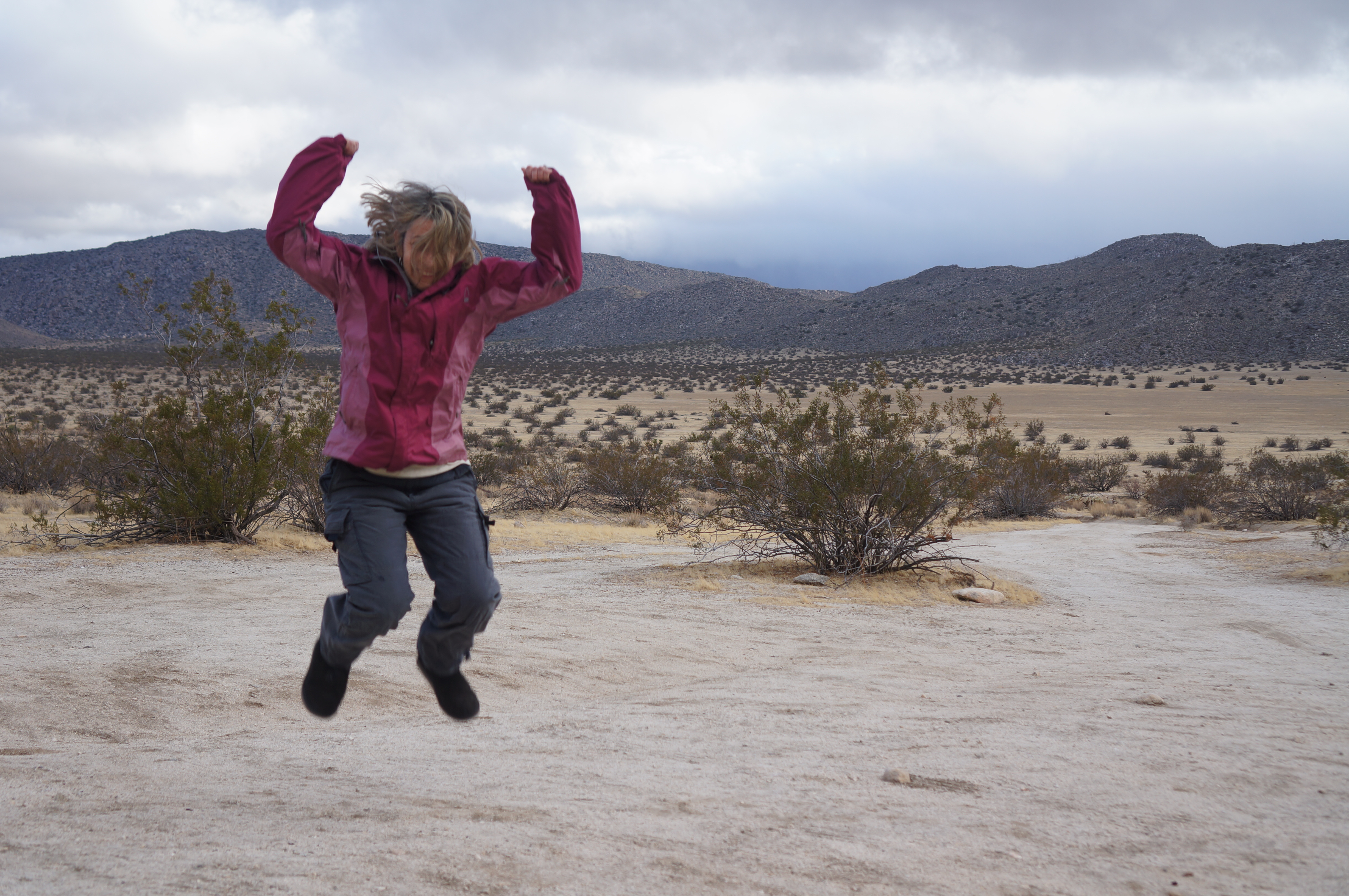
This is the complete picture of my cover picture at ONL191. Me trying to get some air in Anza Borrego desert some time March 2018.

Well, it has been a while. Almost 4 years! Guess it has been busy. I am back because of the Open Networked Learning course: ONL191.

How do I know about it? When I visited Sweden last year, my friend Gizeh told me about it. Gizeh and I go way way back, to Cuba and our times at the National Institute of Oncology and Radiobiology in the late 90s. Funnily enough, after many years we have arrived to a similar place of interest: online learning, active learning, innovative STEM practices, use of media for teaching, social media. I am curious to explore the European side of the field, and I signed up for the course. First requirement, you need a blog! So I just connected this one to the course, and now am feverishly writing an update.

Last time I blogged (October 2015) I had just lost a sampling system in my ocean plastic set and was slightly deflated. In December I broke my ankle walking on a wide and mellow trail in the Mojave road, which set me back a couple of months, but then got back to action. Plastic research, education research, and some cool service activities.

Highlights of the past years include becoming a member of the ASBMB Public Outreach Committee (recently renamed Science Outreach & Communication) and as such getting more involved in outreach activities; a paper published in CBE Life Science Education about flipping a majors general biology course, and the best of it all, getting a NSF STEM education grant for the plastic project in collaboration with Jeff Bowman from the Scripps Institution of Oceanography. The grant (from application to the first months in action) has a pretty steep learning curve. But we are finally doing what we wanted originally…have students participate in authentic and fun research as part of their coursework.

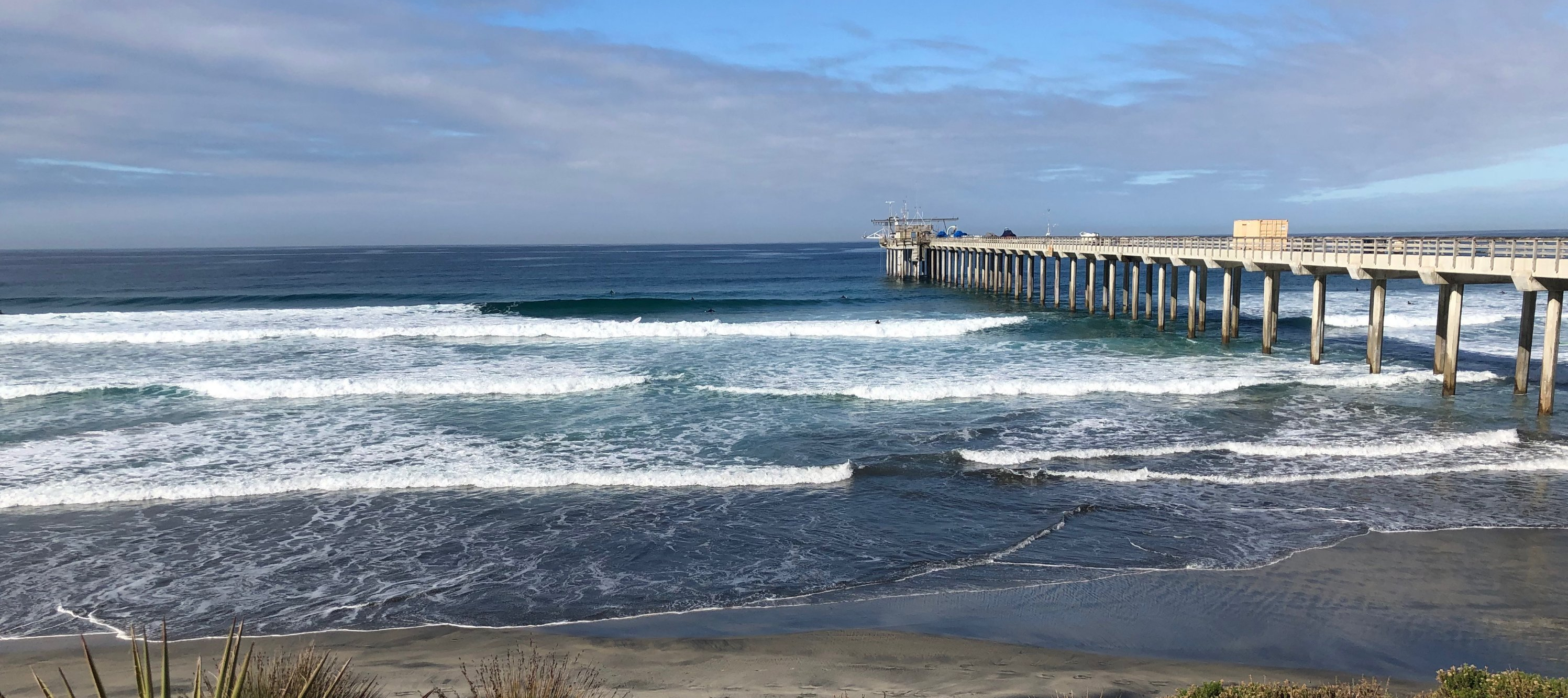
Last Saturday morning, a group of students visit SIO pier to learn about ocean research.

And this is it for now. I am really glad that ONL191 has pushed me back to blogging. Onward and onward!

Yes it has been a busy year! Some updates.

Leave a comment

DSC00040

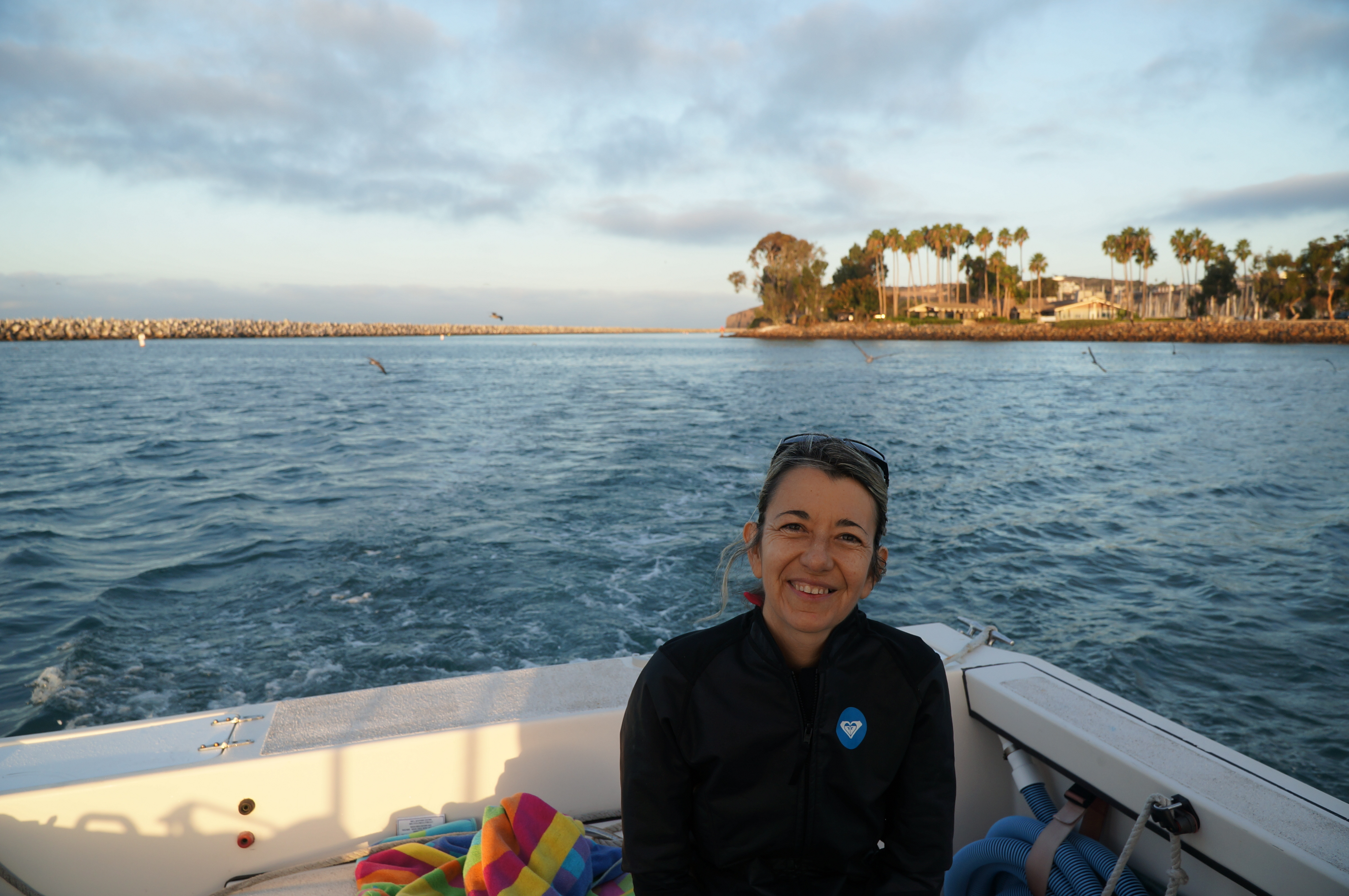
Me on the boat deploying the plastic samples in Doheny State Beach.

What happened after February? Well, a bunch of things. Some of them I mentioned in my older blog postings, and it is nice to know that they have been moving forward over the past months.

  • In a past posting I mentioned number crunching regarding a general biology class redesign’s evaluation. The manuscript was submitted to a minor journal a couple of weeks ago. It is not a Nature level paper, but it has numbers and statistics and some interesting results.
  • I also mentioned applying for a program. I was accepted to ASM’s 2015 Biology Scholar Research Residency, and spent some  days in July at the ASM headquarters in DC with a group of like-minded amazing education researchers.
  • What I brought to the Residency was a flipped classroom project I have been working on with a colleague. She and I recorded lectures, played with Camtasia and Doceri, and did some numbercrunching too. After the residency, we added qualitative methods to the mix.
  • The Small World Initiative is going strong. In June I coordinated the yearly training at our campus, and had both amazing training companions as well as a group of enthusiastic new partners. In July, changes took place in their leadership, and now we are moving towards a broader implementation both geographically and educationally, while setting up the stage to follow up on all those antibiotic producers.
  • I dived heads-on into using metagenomics. At the end of last year I received a small internal grant for a collaborative project to study what kind of microbes attach to plastic bags in the ocean. The experiments using a homemade setup yielded reproducible quality DNA and metagenomic data, and now we are in the process of evaluating the system in the open ocean. The project has taken me to metal shops, lobster trap companies, marine supply stores, and harbor police officers, as well as to fruitful discussions with Scripps Oceanography scientists and metagenomic experts. Just last week I held a small talk about the project. It is fun. I just wish I knew more bioinformatics.
  • I attended the GCAT-SEEK workshop in the summer as the wingman for our bioinformatics expert. While she was on page 30 of the tutorial creating some amazing 3D graphs I was still struggling with the Linux commands. I still learned tons! It is a great opportunity.

So yes, seems like we are getting to the reaping the harvest part, finally. Of course nothing is really ever completed, but it is nice to see results, and also some sort of conclusions.

Three posters presented at AAAS2015

Leave a comment

Here are the three posters I am presenting at AAAS2015, or better said, I am presenting the first GEP poster, and the two others are student posters. Whew! It was a bit stressful last week, but it is nice that it is done. Poster session this afternoon, 2/14. Happy Valentine’s Day!

Three posters presented at AAAS2015.

Surrounded by geniuses?

Leave a comment

Obi wan Kenobi

Readers may have noted my absence for a week- I was out of town for a workshop last weekend, and when I returned there was a big pile of reports to grade, plus a number of pressing deadlines. I had to hunker down and plow through them- not yet done, but feeling better now.

Most people, and particularly academics, are familiar with this ebb and flow of work load. How many times we shake our heads and mutter, “Why am I doing this to myself?” Answers are of course manyfold, and luckily most of us do enjoy what we do. Then of course, there are some bonuses.

Yesterday was one of those days that my brain did not seem to work right. I overslept, causing some stress in the morning heading to a meeting, and as the day advanced, I was aware that my mental processes were sluggish.

On the other hand…

  • I was in a meeting discussing the possibility to host a Small World Initiative training at our campus. It was a pure logistics meeting (cost of lodging, catering, possible dates, transportation). I was stuck in the model of previous training workshops. The facilities director asked: “Can we make it a regional workshop to cater to instructors who live close-by and can drive?” Funnily enough, this was an option that had come up before, but somehow got lost in later email threads. As an option, it would be for sure simpler to arrange.
  • Another colleague and I are going through some serious number crunching to look at the effect of an intervention in a non-majors biology class. As it was my original idea, I had a set of parameters I wanted to look at. She suggested to look also at the number of W students (withdrawals) as a proxy of retention.
  • Thanks to a small internal grant, I am now in practice the administrator of resources, a fact that makes me nervous. Have been looking at ways to make it as transparent and clear as possible to prevent any doubts of what is the $ used for. As the project involves the use of a consultant, I have been thinking of some kind of document to reflect expectations, deliverables, and deadlines. My faculty mentor, whom I jokingly call Obi wan Kenobi, pointed out to me that there is indeed an official form for contracts at the university and explained the instructions to its use.

The common denominator of these three examples was my reaction: “Genius!” I exclaimed all three times, as the simple solutions just moved the process along. And yes, I may have arrived to the same solution by myself…but on a day like yesterday, it was wonderful to feel the power of teamwork.

Happy weekend to you all!

Do you need a doctorate to teach at a community college?

Leave a comment

“Dean Dad” Matt Reed had this blog post yesterday, and this morning there were a number of thoughtful comments on it. It is not that often that DD mentions specifically biology positions at Community Colleges, and the posting was right on. The blog post is in response to a graduate student who is considering not finishing his/her Ph.D. and apply for teaching positions at CCs. Matt advises to think twice before abandoning the Ph.D., as the field is competitive, and also to try out teaching at a CC to test the waters and find out if it is the right option.

The commenters were in agreement- finish the Ph.D! While I do not work at a CC, I taught for them before and know the system through friends and colleagues. It is not only that the field is competitive, with many more Ph.D. graduates abandoning or not considering the traditional academic career. Many CCs are now aiming at granting Bachelor’s degrees. But what I am seeing from my corner is that more and more research is being encouraged, supported, and funded in CCs. Big funding agencies such as HHMI and NSF are supporting grants and collaborative projects involving CCs. And to run research and being able to discuss with the “big boys,” a Ph.D. is a clear advantage.

Mark Zuckerberg’s global bookclub

Leave a comment

Screenshot 2015-01-13 22.25.25

I am on Facebook, of course, although you will not find me easily- I have checked the little box that hides my profile from public searches. But I do share quite a bit with my friends and family members, many local but most far flung.

It was not until I saw the movie “The network” that I figured out who Mark Zuckerberg was, and I cannot say that at the time I was sympathetic to him. But with time, and seeing his activities in the world, a number of initiatives, charity work, etc. I decided he was ok after all.

Then I watched him speaking Mandarin and my “ok opinion” jumped to a much higher level. It is admirable that he took the time to study a completely different, challenging language, and was open to come out to a high profile, public event and risk making a fool of himself. And for an American, that was quite a statement. I started almost admiring the guy, and as such decided to follow him on FB.

His posting asking opinions as to which should be his 2015 yearly challenge was also endearing to me. Of course I suppose he already knew what he was going to choose and this was just a PR gig. But, honestly, why would he even need a personal PR gig?

And then he announced that he would read a book every 2 weeks, and formed a page called A Year of Books, which as today has more than 249,000 likes. The first book was Moises Naim’s The End of Power. The book was sold out in Amazon by the time I checked, luckily I could get the Kindle version. And today, there was a Q&A with the author. I am delighted. No, I have not finished the book yet, but still enjoyed reading the questions and the answers by the author. Here is what he would like the readers to take away from the book:” That power has become easier to acquire, harder to use and easier to lose. And that this is happening everywhere, both geographically and functionally. That is, it is happening around the world and in all human endeavors where power matters – from politics to the military, and from religion to higher education or business and all else.”

I think this is a great idea. Love books, and love the idea to spread the word about books in such a global manner. Can’t wait to learn which is the next.

Why does Twitter work for me?

3 Comments

Science tweets galore!

Although I have tried numerous times, both “formally” as part of professional development chats and informally, few of my colleagues or friends have adopted Twitter. I have noticed misgivings and suspicion about “being on Twitter,” and no explanations or examples have worked to change that perception. I understand the misgivings- as my friend and mentor Michelle Pacansky-Brock knows, I was extremely suspicious about the public nature of Twitter when she introduced it to the Building Online Community course. The fact that I embraced it afterward and it has remained one of the few social media outlets I follow publicly is pretty telling.

Blog writers and readers love lists, so here comes a short one top off my head about why am I on Twitter:

  1. Learn about news first-hand and in real-time.
  2. I get “curated” news from different point of views, directly in my feed (more later).
  3. Make new connections and friends.
  4. Learn about what is going on at professional conferences I cannot attend.
  5. Ask for and receive advice.
  6. Complain about or praise services- I usually receive lightning-speed responses from vendors.
  7. Provides a virtual “water-cooler” environment. Not all is serious and professional. However the 140 character limit keeps chatting under control.

Let me give a quick and recent example of point #2 regarding curated news. A few days ago, namely January 7, Nature magazine published an article about the discovery of a novel antibiotic using a very creative technique to culture soil microbes (of which the majority are impossible to culture in the lab with traditional methods). The article was picked up very quickly by many mainstream media outlets and was heavily publicized over the next few days.

How did I learn about the article? Through Twitter.

I am not sure which was the first tweet that caught my attention, but I do know that is was in the evening or night. And it was not Nature journal’s account’s tweet that I saw, but noticed a flurry of activity among a number of microbiologists, geneticists, and metagenomics experts that I follow. They were referring to the article in the way experts do-  commenting, asking questions, expressing doubts and/or enthusiasm. Soon knowledgeable science writers joined (think Ed Yong) and by the end of the night I had a pretty good idea not only what the breakthrough was about, but also many of its highlights and also limitations.

Next morning the article was everywhere in the news outlets. I received the article by email from friends and colleagues and was asked about it directly. It is a great way to motivate students who do soil research in their courses (as we do), and also raise awareness of the issues with antibiotic resistance.

Let’s say that I was not on Twitter. I might have seen the article if I was the kind of person who reads Nature fresh off the press (which means having full-text online access from home- I don’t). Most probably I would have seen it at the same time as the general public, so I would had to go and read the article first to know what was it about (with all due respect, but I do not trust any press conference about a scientific discovery to get it 100% right). With my knowledge of microbiology and some idea of metagenomics, I would have probably come up with a few opinions and ideas of my own. As I am not surrounded at work with experts in the field (I am at a mainly teaching institution), I would have missed the opportunity to discuss this in person. All in all, to acquire the same knowledge that I got reading at night the Twitter feed of a few selected experts in the field may have taken days or even weeks for me.

Add to this the fact that I am still privileged: I have access to journals through the university library, and I can connect with other experts albeit not as fast as if I was in a top tier institution. Imagine the situation of those who cannot: either as an adjunct disconnected from campus life, or for academics in countries where access to information is more limited.

In summary, Twitter, with limitations of course, allows anybody with internet access to learn from experts and join enlightening and educated conversations. Dear Readers, have you succeeded to get your fellow scientists and colleagues join Twitter? If so, please share how you did it- thank you!

Apropos gut sense and dots

Leave a comment

Today I was preparing one of the live chat sessions I do in my online biology class. Part of it was to clarify an assignment, basically a research project on a topic, and I was stressing the importance of being focused and keeping it deep but simple.

I googled “Steve Jobs quotes” to find the exact wording of the “Simple can be harder than complex” quote. Found a number of other quotes and could not resist reading them.

This thought expresses so much nicer what I tried to say in yesterday’s posting:

“Again, you can’t connect the dots looking forward; you can only connect them looking backwards. So you have to trust that the dots will somehow connect in your future. You have to trust in something — your gut, destiny, life, karma, whatever. This approach has never let me down, and it has made all the difference in my life.”

That commencement speech was indeed so special.

via Text of Steve Jobs’ Commencement address (2005).

Older Entries Newer Entries

CUREing Ocean Plastics

STEM education exploring ocean plastic pollution

about flexible, distance and online learning (FDOL)

FDOL, an open course using COOL FISh

Main Admin Site for the WPVIP multisite

This multisite hosts public sites for Parse.ly and WordPress VIP

#Microjc

An Online Summer Book Club of Science

barralopolis

Teaching and learning reflections around science education

Disrupted Physician

The Physician Wellness Movement and Illegitimate Authority: The Need for Revolt and Reconstruction

The Blog of Author Tim Ferriss

Tim Ferriss is the author of five #1 New York Times bestsellers and host of The Tim Ferriss Show podcast.

Here is Havana

A blog written by the gringa next door

Storyshucker

A blog full of humorous and poignant observations.

Jung's Biology Blog

Teaching biology; bioinformatics; PSMs; academia, openteaching, openlearning

blogruedadelavida

Reflexiones sobre asuntos variados, desde criminologia hasta artes ocultas.

Humanitarian Cafe

Think Outside the Box

Small Pond Science

Research, teaching, and mentorship in the sciences

Small Things Considered

Teaching and learning reflections around science education

1 Year and a 100 Books

No two people read the same book