Out of the frying pan…

Leave a comment

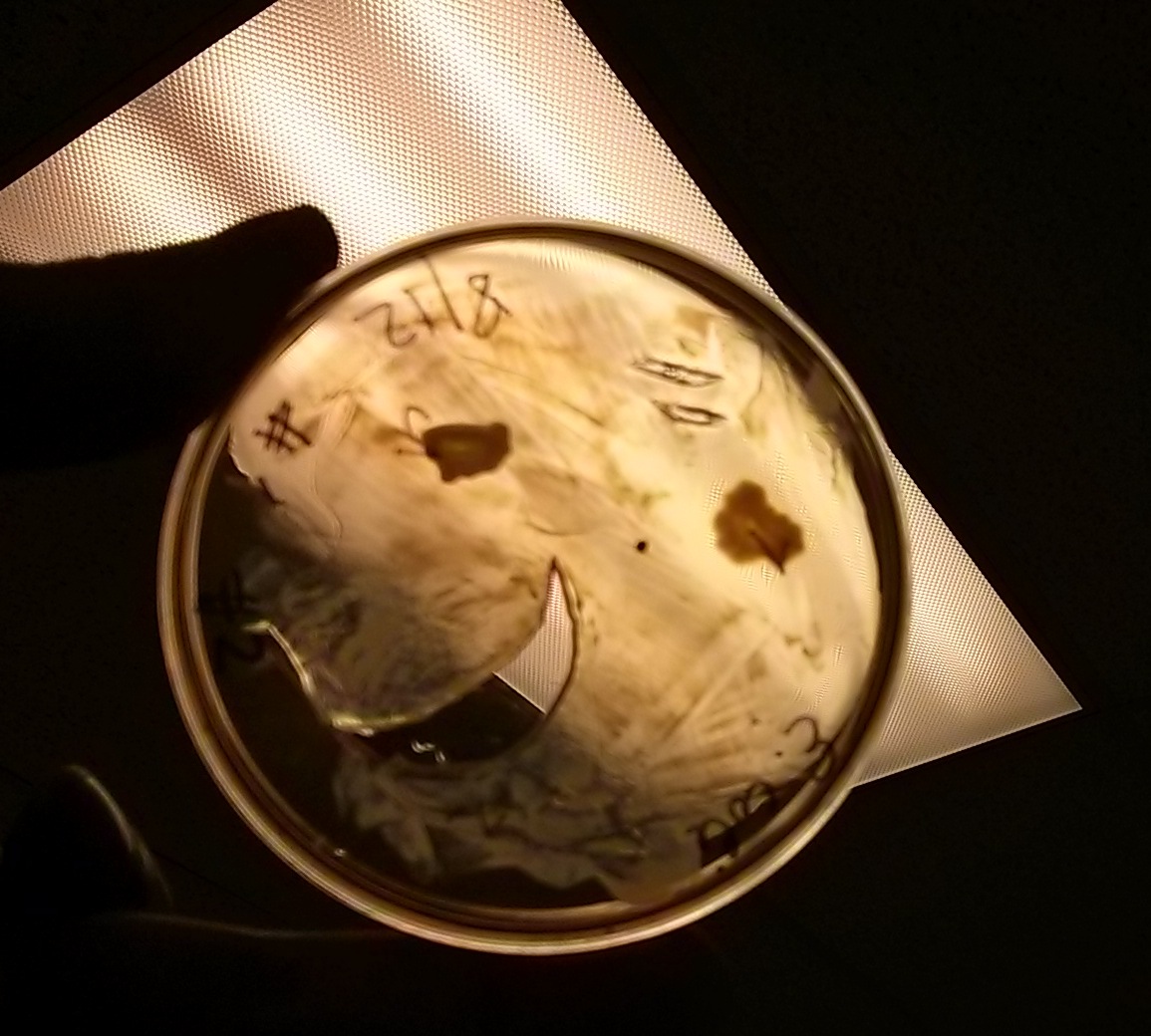
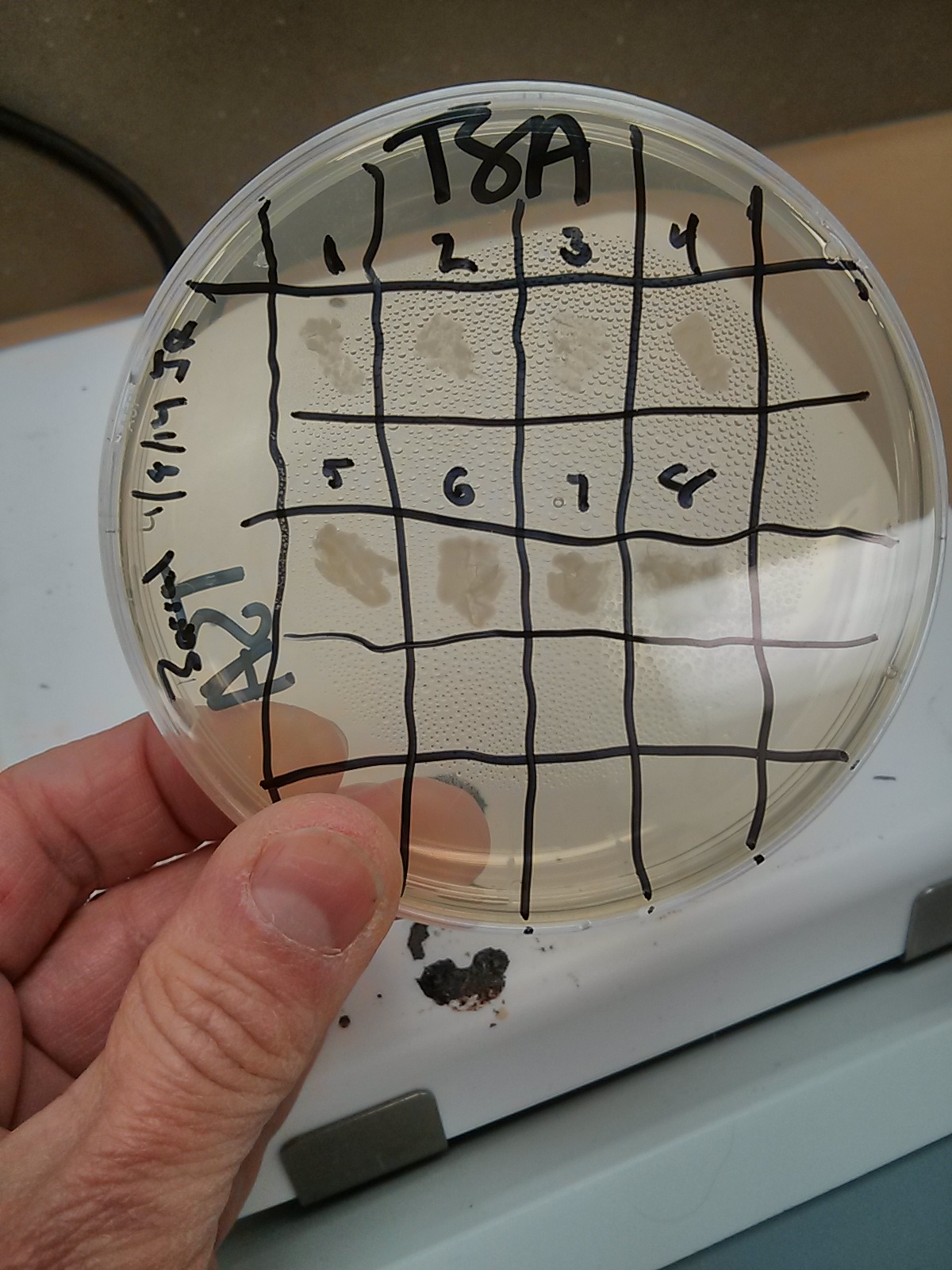
One of the student pick-and-patch masterplates

One of the student pick-and-patch masterplates

It has been months since I wrote a blog post, party because of busy professional times (applications, abstract submissions, deadlines), plus holidays, a nasty cold, and family. Nothing out of the ordinary.

I started a microbiology course last week, one that is greatly relevant for me: it is the adaptation of Yale’s Small World Initiative to our university’s accelerated schedule. Even more, it is actually an attempted merger of our previous lab curriculum with Yale’s research-based approach. One week into the course I am cautiously optimistic that we will pull it out.

During the pilot partners workshop last summer, it was obvious that the accelerated pace would be one of our main issues. The original Small World Initiative (SWI) was developed with a traditional semester course in mind (14-15 weeks). On the other hand, it also assumes shorter lab sessions and students being engaged in a number of other classes and activities. National University‘s model is based on students being focused on one course at a time, and lecture and lab are considered one course each running concurrently. This means long (2-3 hour) labtime chunks 2-3 times per week, for 8 weeks.

So developing the schedule has not been too bad. Of course, the main issue will come once the soil cultures are tested for antibiotic producers. We would like students to have something with activity against the tester strains so they can move forward. If this does not happen, in a semester there is time to go back and swab new soil samples. In 8 weeks, that may not be possible. I have some cultures to provide as positive controls and if it comes to that, something to work on if there are no producers.

The other issue has been also the student population and their majors. Most of our microbiology students are heading to nursing or other health-related careers, not research. It is part of the curriculum and also our obligation as instructors to introduce students to the importance of aseptic technique, the role of disinfectants, antibiotics and hand-washing, plus let them practice some of the most common medical microbiology procedures (throat and urine cultures, bacterial typing, some serology etc.)

Yale has developed a very nice laboratory manual for the SWI, which is basically open source. Obviously, it does not contain any of the medical microbiology kind of experiments. My original idea was to use that manual with handouts for the other exercises. However, things got soon complicated. The beginning of the SWI process is quite mellow: swab soil samples, observe, pick and patch. Even including all kind of discussions about soil microbes, culture media, and colony characteristics, the lab procedures are rather quick. It made sense to use the extra time to get students going with smears and stainings, and to practice aseptic technique and microscopy.

So at some point during the holidays I realized that it was easier for me to start assembling a new manual that mixing and matching two.

Yeah, I know.

I am writing the manual as we go, basically. I use a live Google document that my students have access to, but cannot edit. I also make copies of the procedures as most of them, tech savvy as they are, like paper.

In a way I am glad. For years we, the microbiology instructors, have dreamed with writing our own lab manual. While we go from the manual for most of the basic exercises, we have our own tweaks to many others plus the added little exercises developed over the years.

But…it is quite a chore, especially as it was not really planned.

What do they say? Out of the frying pan…into the FIRE (cue Meat Loaf)!

And that is all for today. I’ll try to post updates about the logistics of the course and how the project is going. As of today, students have colonies and they have made their master plates. With MLK weekend coming, we will play with some other techniques this week (streaking, differential media) and get started with antibiotic production testing next week.

It will be fun 🙂
Why am I presenting at Fall CUE?

Leave a comment

Image

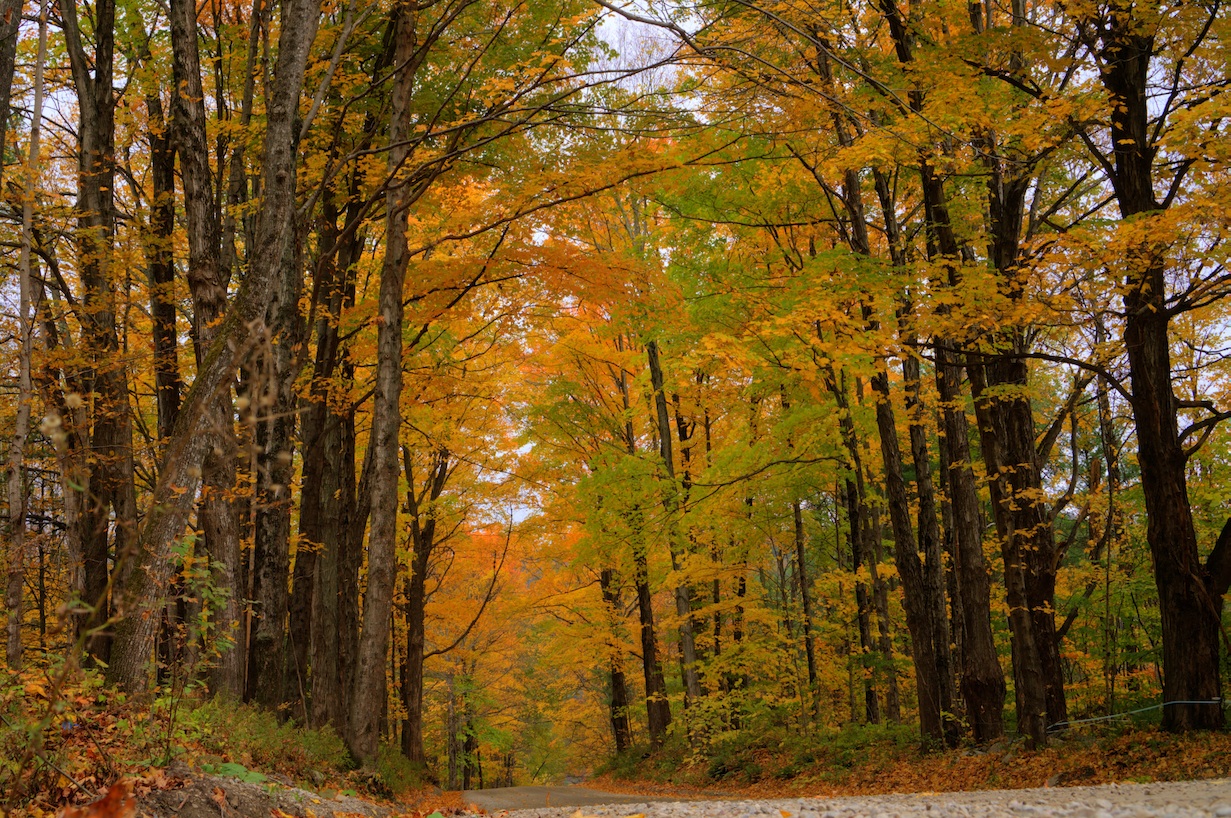
I took this image during a recent trip to Vermont. Somehow the combination of beauty near and far seems like a metaphor for my posting.

A lifetime ago, or so my pre-social media time feels, I asked Michelle Pacansky-Brock which education conferences she recommended. Michelle was and still is a major inspiration in my journey of teaching and learning innovation (check out her blog and her recent keynote at Focus on Teaching and Technology), so I took her recommendation of CUE at heart. “They are mainly K12 folks, she said , so a lot of what is presented does not directly apply to what we do (we both teach at the college level). But they are some of the most passionate, creative, and engaging educators I have met, and I always learn a lot from them.”

So I attended my first CUE a few years ago, and felt slightly out of place, but at the same time she was absolutely right about the energy and the enthusiasm. I also loved that everybody was running around with laptops and tablets, that things presented were immediately accessible real time, and during those 2 days I learned a huge number of tricks and came back full of ideas.

In the past 2 years I have been blessed with a position that allows me not only teaching and education research, but also some bench science research. I have come a whole circle at a higher level, and while biology education research is still my main focus, I enjoy being in the lab streaking microbes and planning experiments.

So why am I presenting at Fall CUE?

Michelle’s reason still stands. I follow through Twitter some of the CUE regulars and I cannot wait to learn hands-on about Google tools, or how to use games in education (another of my pet peeves), or get deeper insights into Project/problem based learning.

But the main reason is that I want to bridge the divide. Most people are aware of the STEM (science, technology, engineering, math) education problems in the US: there are not enough qualified graduates, and in spite of a growing number of STEM jobs, there is just not enough qualified candidates to take them. Minorities tend to be a minority in STEM careers too.

I have taught and teach a variety of biology courses. It is fun to teach advanced courses where students are already interested and passionate about science, and want to become researchers. But the course that really touches me, both in the sense of challenge and responsibility, is the Bio101 or similar. Students’ first biology course in college, mainly for non-majors. ALL students are interested in biology, as biology surrounds us. The issue is, how to make them realize that they ARE interested? How can we make them realize that we can all use the scientific method and analyze complex issues with just a handful of tools and concepts? These are some of the issues I discuss in my presentation (still a work in progress).

Thanks to my collaboration and ongoing conversations with education faculty at my college, I am aware much more now about the challenges they face, especially with the new Common Core standards.

One of the most respected journals in science, Science magazine has a collection of materials and published recently a special issue about education. Some of the materials are dedicated to science at the K12 level. Because, let’s face it- most of us love or hate science because of a teacher in middle or high school. I hate physics because a teacher way back when accused me of lying (she told me to stop talking in class and I replied all hurt that I had not- which was true). I love chemistry because of fun labs and inspiring teachers, and I was hooked on biology because of a wonderful teacher in 7th grade who showed me that I could explore chemistry in living systems. By the time I entered college I knew that I liked science.

How can we, K12 and college educators and researchers make this journey smoother for students? Science teachers in K12 can collaborate with researchers to involve their students in real life, applied research. Some biology research requires complex instrumentation, but others may require just computers and internet (think bioinformatics projects, of which there is a number already). College educators can learn how to improve their teaching approaches. We want the same thing: well-rounded individuals who appreciate the beauty of science. They make take that route or not, but we all want adults who understand how science works and are able to make informed decisions on everyday matters. Think healthy nutrition, stem cell research, climate change, use of antibiotics in feedlots, GMOs, cancer treatments, or vaccinations. It is frightening to think how many of our policy makers do not understand science.

Ok off my soapbox for now. If you are at Fall Cue and are involved or interested in science education, please see me, tweet to me, or check out my presentation. I am in Orange County CA, and would love to talk to science teachers in the area and see how can we collaborate. And if you are reading this and have comments, advice, ideas, additional resources, please comment. The more the merrier!

Two days left…

Leave a comment

picture showing Fall foliage

Lincoln Gap Road, Green Mountains VT

…and I will be back to Real Life. This includes: an ongoing online course, a conference presentation next week, couple of important meetings related to a program proposal, finishing an IRB application, writing handouts for labs, developing a set of lecture powerpoints, and getting serious about my grad student’s project.

This vacation week was planned months in advance, with the Vermont Fall Colors in mind. While we were told to be a tad late, I was still blown away by the explosion of colors. Since my Swedish days I had not seen so many hues of green, yellow, and red; resulting in hundreds of pictures of trees and forest paths. I had bought my first nice lens (35 mm, f1.8) for my camera, and am still learning its possibilities. Besides foliage I have tried my hand at covered bridges and quaint white churches, cemeteries, waterfalls, and art exhibits. Add family visits, eating, drinking, and playing board games. This is all very relaxing.

Except it is not 100% vacation after all. Emails still roll in vacation autoresponse notwithstanding, and I still answer them as some are time sensitive. Meeting invites come in. Official matters submitted weeks ago start getting responses.

Many have written about how difficult is for Americans to let go of work, and how common it is to check emails and keep working even during vacations. I am guilty, but I cannot really help it. In a way, being an early adopter of technologies has been very helpful in my professional development, and this includes being, if not “on top” of everything, but being “aware” of what is going on.  That said, I am not happy with the nagging sense of bad conscience when I see my virtual colleagues actively involved in discussions such as the Scientific American blogging/harassment fiasco or the debt ceiling debacle and its implications on scientific research.

I am trying really hard to forgive myself.

Just sent an email to my students. I feel better now.

Time to go for a hike 🙂

I should really take a writing class…

Leave a comment

A picture of the statue of a blue elephant on a pier.

One of the elephants of the Elephant Parade, currently in Dana Point, CA. I can identify with elephants: slow and persistent.

I have not blogged in quite a while, which is mildly frustrating. Last week was almost exclusively dedicated to my university’s Fall Assembly, which is one of the two times per year that most (if not all) faculty and admins from all campuses are physically in the same space. Needless to say, those are the days when most businesses and collaborations get done or started, so besides the programmed meetings there is a lot of networking going on. Add the couple of days before and after spent in a frenzy of prepping and then catching up with grading and everything else, and the week is gone.

But I have realized that one of the issues that affects my blogging is English writing. I feel my writing is quite ok, and my spelling is far better than that of many of my students, but my original Spanish does bleed over in a way I structure certain sentences (usually much longer than acceptable in written English). And although late nights are usually my quietest times and when I often have most inspiration, that is also the time when I tend to make more mistakes. So I often will start a posting at night with the determination of reviewing it next morning…and very often the draft stays a draft. Every time I look at my list of drafts I cringe. The only times I had been able to write more or less regularly were the times where I forced myself (like now) to sit down after breakfast, write, and publish on the spot.

The thought of taking a creative writing class in English has been in my mind for quite a while. And recently I learned the importance of good English writing in a context way more important than blogging: while assembling my reappointment dossier.

My university does not have traditional tenure, but timed appointments (starts with 2 years, and depending on the metrics and rank the length increases later on). Honestly, I find the system much more energizing than the traditional one- keeps people on their toes because even with a certain job security one has to prove one’s value on a regular basis. I see old timers working really hard and exploring new things all the time.

My appointment is until next July, but I was strongly suggested to complete my dossier for the Fall reappointment cycle so I’ll know by the end of this year. So that has been another of my reasons not to blog as much as I wanted- assembling the dossier was quite an undertaking.

Following my elders’ advice I had started collecting documents months ago, and created a google document where I would type my achievements as they happened (certificates, committees, you name it) as well as ideas for my reflections. The latter was absolutely critical at the time of the actual writing- having inspirational quotes and ideas at hand to frame my uniqueness and excellence made the job much easier.

But it was only when I read the detailed instructions and the reappointment process that it hit me. My reflections would be read not only by scientists, but by colleagues from all disciplines, including humanities. I was not asked to write a research proposal or a grant application: I was asked to do creative, elegant, and convincing writing. Now that was scary.

Of the three required reflections (teaching, scholarship, and service) I was told the hardest to write and the most scrutinized would be the teaching one. So I spent most time on it, and at the end I was quite content with the result. After many iterations of the opening sentence, I decided to just dive in to define who I am: “I came to teaching through science, after long years of working as a research scientist. Therefore the core of my teaching is the passion for science and particularly biology literacy.” After that I defined some of the main pointers in my teaching practices, and then included a quote from Steve Jobs that I have always found inspiring and very true: “That’s been one of my mantras – focus and simplicity. Simple can be harder than complex: You have to work hard to get your thinking clean to make it simple. But it’s worth it in the end because once you get there, you can move mountains.”

No kidding.

After I was done with what I considered to be a literary masterpiece, I sent it to a number of mentors, and in a spark of inspiration, to one of the English faculty asking for feedback. That was the best thing I did. He sent back the document with a number of minor corrections and comments regarding transitions and lack of clarity, and once corrected I felt much better.

On the other hand, all the time invested in the teaching reflection meant I spent much less time on the service and scholarship reflections. To be honest, I was typing the final version of the service reflection the morning of the due date. Ouch. My husband was kind enough to review and correct some of my usual grammar booboos (I still have difficulty with the usage of “X and me” versus “X and I” among others), but without the feedback of the experts I know they do not measure up to the teaching one. Fingers crossed.

After this experience, I am again seriously considering taking an English writing class. I doubt I will be able to do it any time soon, but the prospect of hopefully being able to write quickly and without major grammar and style errors sounds like a good investment both for my formal and informal scholarship.

Colleagues from the sciences, especially non-native English speakers, do you have a similar experience with writing?

A scaffolded Biology assignment 2

Leave a comment

Arrangement of Specimens by Hyppolite Bayard. Digital image courtesy of the Getty’s Open Content Program.

Tomorrow has become 2 days later…but here is the assignment. The general outline is:

  1. Students select a topic. This can go different ways. For a non-majors general biology class, I have asked them to choose a topic that interests them. I provide a list of examples, but encourage them to propose their own after discussing it with me. Thanks to that, I recently learned a lot about deer antlers (courtesy of a student who likes hunting) and have been given insight about opinions about GMOs (that would be another posting). The idea at the non-majors level is to practice biology literacy. At higher level courses the topics become more specific as the idea is to explore deeper. So for example, in a majors bio class I would give them a list of genetic disorders to choose from. By providing clear gene and protein targets, they can explore them much more in detail. In microbiology the idea is to study some kind of microbe at the structural and functional level.
  2. An important part of the process is defining what students are going to post about in each iteration. This is indeed, the hardest part. We want students to peel away layer after layer of their topic, instead of just doing a mini-wikipedia like summary. So I have found important for students to make an outline of their future postings/reports. For a general bio topic, it can go like this: gene => protein=> physiological function => population level (this can be inheritance pattern, epidemiology, economical impact etc). For a microbiology topic it can be: microbe’s structure => microbe’s function => population/societal impact.
  3. Then come the analysis at different levels. Depending on the class, more or less information and details will be required. I try to have students visit databases, and gather data. Even if they don’t know what to do with a DNA sequence or a Jmol structure, it is often an eye-opener for them that all that information is available online.
  4. Feedback, feedback, feedback. It is a lot of work, and that is why grading rubrics are useful. I tend to move in grading from formative to summative. In the beginning, the main criterion for grading is if they actually submit the information required and follow instructions. With more practice, I expect them to be more specific and actually process the information.
  5. Final report: at the end of the process, students are to summarize their research in one piece of material. I often like it to be a poster, as combining text and graphic information in an efficient way is a useful skill. When at the Yale SWI workshop, one colleague share his way of practicing effective poster skills with his students: he would pick up a bunch of poster printouts from conferences and would give them for students to analyze. Which structure or format seemed the most effective in transmitting the message? I have tried other formats, from powerpoint presentations to wiki pages. However, I have found that posters have such a stringent space limitation that students do need to focus on the key information and how to best convey their messages. Oral presentations are another great way to practice communication skills. Here, following time limits is critical.
  6. Peer feedback. Interactions between students are invaluable. However, if left spontaneous, comments on these kind of projects will be usually rather superficial. I have found that the peer evaluation part of any of these processes has to be scripted if it is to be meaningful. In my latest iteration of one of these projects, I had to spell out that the comment had to include 3 parts:
    • positive feedback about something that the observer liked
    • a question
    • a suggestion

And this is all for now. Heading to the San Bernardino mountains tomorrow for the long weekend. Should be cooler up there. Happy Labor Day for those in the US!

A scaffolded assignment for biology courses 1

Leave a comment

Barthel Beham, Study of three skulls: different views of the same subject, a work in progress. Digital image courtesy of the Getty’s Open Content Program.

For the past couple of years I have been polishing a kind of formative assessment that works very well for biology classes, especially general biology. It is not my invention of course: in my school’s MS Bio program students analyze their selected thesis topics from a variety of point of views (molecular, cellular, organismal) as they move through the different courses, and I was also much inspired by Prof. Campbell’s approach to teaching molecular biology through the “Your favorite…” assignments.

Most biologists would recognize this approach as attractive, as it appeals to the basic core concepts in biology, including the levels of complexity of living matter, the relationship structure-function, and the notion of any scientific topic being inherently complex. Deconstructing a topic to its simpler components to understand it, and then putting it together again in a larger perspective is what we do all the time as scientists. Applying the process to a topic that  students find personally interesting ensures they will be more engaged. In summary, a win-win situation.

As most things, the devil is in the details.

Lately I have been thinking a lot about my teaching. Between the informal mentoring by my education colleagues and several science education projects, it has become now more of a routine to think along the lines of “what do I want my students be able to do” and “what are the activities through which students can practice.” During the Coursera Gamification course I learned how good games aim at the edge between boring and challenging, and how the learning curve should be gradual to avoid losing players giving up in frustration. I lived it during the annotation practices of the GEP workshop: I consciously chose an easy project to start with so I could have a positive experience of being able to finish and then move to a harder one. The learning curve was still steep, but I had some sense of accomplishment, while some of my colleagues who chose complex genes with multiple isoforms sat through both days pulling their hairs.

And then of course there is also the issue of guidance. Discovery-based instruction is outed as the best way to teach science and I agree. However, we cannot really expect students to grasp the complexities of the research process by themselves, especially at the undergrad level.

When I started implementing these types of assignments, I assumed (incorrectly) that students would see right away the purpose of peeling away the layers of complexity of a biological topic, and would be able to analyze it with discipline, to finally put it back together. At certain levels, some students could, but most struggled and delivered “generic” reports, often obviously copied from wikipedia in discordant chunks.

With time and practice, I have gotten better at introducing the assignment, walking students through the process, and providing more detailed instructions. During the latest iteration, in a non-majors biology course, I developed highly detailed grading rubrics so students had no doubts about what was being asked for them. I personally dislike grading rubrics, as they are easy to game once you know how they work. On the other hand, especially in online courses, they are helpful to guide students as to expectations.

And then came the epiphany.

A student was writing about GMOs. We are talking a non-majors general biology course. It was the posting that should have tackled the molecular aspect of her topic, so I advised her to focus on one or two GMOs and look at the particular molecule that was being introduced and what it did. She mentioned in passing that the genes introduce resistance to insects or improve culture conditions, but the rest of her writing was a passionated diatribe against GMOs. And she did not meet the word count requirement.

I groaned in frustration. Didn’t I painstakingly break down point by point what I was looking for? Didn’t I post clearly that there was a minimum of 750 words? I huffed and puffed and moved on to the next posting, after giving her a hefty markdown.

Then came the squeaky clean postings. The ones that followed point by point what I was looking for in the instructions. With impeccable wording. No obvious plagiarism, but if you know how to do it you can evade the detectors. After happily assigning high scores to a bunch of them, I started to feel concerned, and went back to the first student’s writing. In comparison to the other postings, her writing was passionate and hers. She wrote to convey a message that was personally important for her, and I could see a clear space for improvement in that assignment. Improvement not only for better analysis, but also for a better knowledge in an aspect of her life that was important for her.

Just that day I had found this posting of “Dean Dad” Matt Reed very relevant to this train of thought, where he distinguishes two types of writing errors: “errors of laziness or ignorance, and errors of attempted growth.”

So what was my epiphany? That grading rubrics are useful for those students who know how to use grading rubrics, and will probably result in uniformly acceptable work with minimum attempted growth. But in other cases, one needs to be careful in deciding if this is just not paying attention/being lazy, or if this is somebody who needs practice in how to approach a complex topic. I am curious about the next posting.

And this is for today- tomorrow I will describe a bit more how I approach this kind of assignments and share some of the experiences (good and bad) along the way.

Dear readers, please share if you use this kind of assignments, and what is your view about grading rubrics!

Microbial updates

Leave a comment

This has been a pretty hectic week, and with lots of food for thought. The situation in the world concerns me, and also other issues of the bigger picture. But today I will focus on updates on bugs. Taking care of microbes growing has  a zen-like quality to it. Call me old-fashioned, but waiting for a hot loop to cool is relaxing.

One of the bugs I brought from Yale, a perky Pseudomonas, has proved to be a funky one. Last week I strode into the lab and decided to try everything available in the fridge, and inoculated all kinds of media to get more information. Results came out along the expected ways (negative fermentation and MR-VP among others), but the nitrate was negative. The sequence had been pointing at a weird fish-killing Pseudomonas, but  P.plecoglossicida is nitrate positive. My bug did not seem to be fluorescent under UV light, so P. fluorescens seemed to be out of question, but it is nitrate negative, so I inoculated a couple of gelatin deeps and am waiting for the results, gelatinase production being one of the distinguishing features. I have been around labs enough to not get too excited about weird stuff, and I just cannot believe that the soil at Yale University is harboring some kind of special bug. But at the end that is not so important…it is the antibiotic production that matters. So I am also repeating the spread/patch plate against four bugs, including E. coli & P. aeruginosa. After that, if things repeat, then I will have to make some decisions about what to do next.

Image

West Coast & East Coast kombucha. Just refilled the East Coast one, that’s why it is in the bottom.

As for kombucha, as they say, no news is good news. It has been growing placidly in the corner, by now in its 3rd of 4th tapping. The first ones had 1/2 cup of sugar per liter, and were very sweet in the beginning and very tart at the end. Then I halved the sugar amount, and the resulting drink was way mellower but also bland. I had started experimenting with diluting the strong concoction with fruit juices, which seems to produce a pleasant flavor. Another option is to add chia seeds, which give a nice chewy quality to the drink not to mention the added protein. I finally relented and bought a set of big jars for the cultures. The West Coast one has been steadily growing, and I can see it becoming equal to the Yale one, especially after today as I started to give away babies (tearing away a layer). Next stage will be experimenting with different teas and sources of sugars.

My next post will be about scaffolding assignments for a General Bio class. I had a kind of epiphany about grading rubrics the other day while banging my head in frustration because of students not following instructions. Stay tuned!

Small World Initiative: update on the babies

Leave a comment

The last day of the Small World Initiative at Yale my roommate and I walked down to the UPS store and shipped a few streak plates home. They were to arrive on a Thursday, the day I had to drive down to San Diego for a couple of meetings, and then I was leaving town on Friday. I asked the labtech to put the plates in the fridge.

I completely forgot that the little box was not labeled anything special, and as normal mail it was lovingly placed on my chair in the office. When I returned to campus the Tuesday after, I started opening the box with apprehension. “It will smell bad,” announced to the labtech as I started opening ziplock bags. “One of them seems to be a Pseudomonas.” Indeed, when the last bag was opened, the musky smell of earthiness surrounded us. However, the babies looked ok. The colonies were big and fat, but the plates were not overgrown.

That same day the 16s sequences had arrived via email, and after a quick Blast, the predictions based on Gram staining and colony morphology were confirmed. One was a Pseudomonas, the other a Bacillus.

Image

Inhibition zone on the E.coli spread plate around one of the colonies. Broken agar, my bad. Ugly lawn too.

With a microbiology course happening on campus, I looked for bad bugs to test, and found E.coli and Staph. aureus. I did a quick spread/patch plate with the 2 candidates. Today the Pseudomonas was showing a clear inhibition zone with E.coli, and a possible one with the Staph.

So this is exciting, although hardly earth-shattering. As an anthropocentric cell biologist (mea culpa, mea culpa) I knew a lot about antibiotic resistant nasty bugs such as P.aeruginosa, but I just realized there are a lots of other Pseudomonas in the soil that have to do with protection of plants from diseases. And those antibiotics are of the phenazine type. I just got started in the literature research, so I do not know much more, apologies.

That said, I do want to finish the SWI sequence, so next time it will be testing against the whole battery of ESKAPEs, and starting some traditional microbiology. Where is a Bergey’s when you need it?

I know it is not P. aeruginosa, as even when spread on a P agar it was not green. And I don’t think it is P. fluorescens because it does not fluoresce under UV light. Grateful for your advice as to how to proceed.

The other baby, the Bacillus, did not do squat to E.coli.

Still love them both. What do microbiologists say? “You get attached to your bugs.”

Amen to that!

Once a bum always a bum

Leave a comment

Image

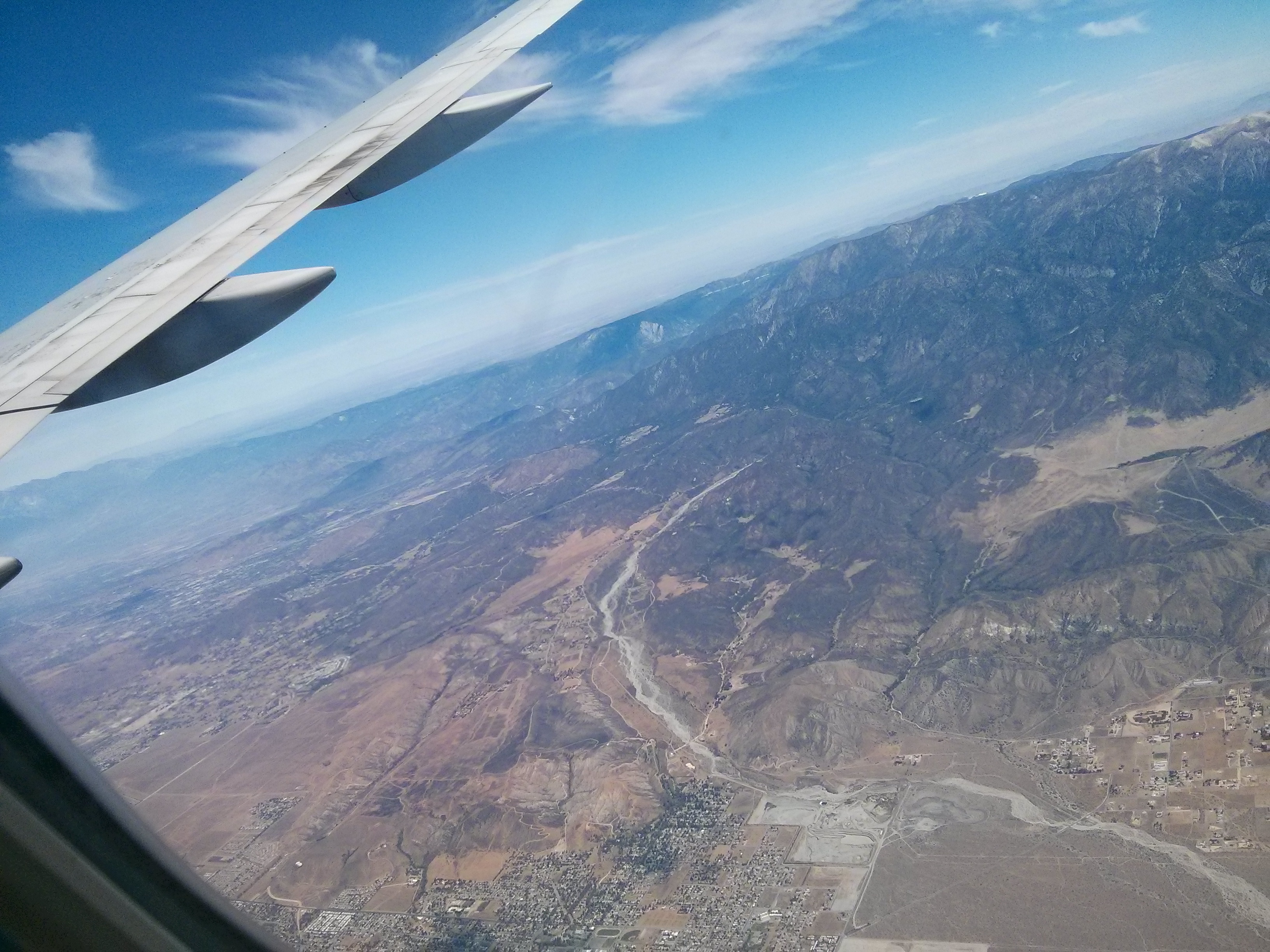
View of the Coachella Valley from the air (last week’s flight home)

“We find after years of struggle that we do not take a trip; a trip takes us.”

I read John Steinbeck’s Travels with Charlie when I was in my teens. I found it fascinating, although at that time probably did not understand half of the very American references in the book. Upon re-reading it couple of years it struck me how valid many of his points still are.

And of course the paragraph about excitement of travel just hit home. This is exactly how I feel. I may complain about the stress of travels and time away from home, but in my heart of hearts, this is what I truly love to do.

I am writing this from a Starbucks along the I-10, as I drive East this Friday morning. I am teaching an online class, but I will have internet in the mornings and evenings, and I warned my students I won’t answer their emails within 5 minutes as I often do. My files reside in my Mac and in the cloud, accessible through a variety of ways.

What I am trying to say is, with the internet and the ease to stay connected, it is so much easier to travel these days. Even if teaching.

“When I was very young and the urge to be someplace else was on me, I was assured by mature people that maturity would this itch. When years described me as mature, the remedy prescribed was middle age.In middle age I was assured greater age would calm my fever and now that I am fifty-eight perhaps senility will do the job. Nothing has worked. Four hoarse blasts of a ships’s whistle still raise the hair on my neck and set my feet to tapping. The sound of a jet, an engine warming up, even the clopping of shod hooves on pavement brings on the ancient shudder, the dry mouth and vacant eye, the hot palms and the churn of stomach high up under the rib cage. In other words, once a bum always a bum. I fear this disease incurable. I set this matter down not to instruct others but to inform myself….A journey is a person in itself; no two are alike. And all plans, safeguards, policing, and coercion are fruitless. We find after years of struggle that we not take a trip; a trip takes us.”
― John SteinbeckTravels with Charley: In Search of America

Time to hit the road!

Ex-RNA in exosomes?

Leave a comment

Ex-RNA in exosomes?

It’s fun to read about things that were part of my life and kept going. Like exosomes. My little review from 2005 still gets a lot of hits due to the current popularity of exosomes. I follow what exosome people do in their Facebook page. It was a cool project to do. Lots of ultracentrifugations. Good times. What do you think about little vesicles and exosomes? Will they be the next diagnostic breakthrough?

Older Entries Newer Entries

about flexible, distance and online learning (FDOL)

FDOL, an open course using COOL FISh

WordPress VIP - The leading enterprise content platform

This multisite hosts public sites for Parse.ly and WordPress VIP

#Microjc

An Online Summer Book Club of Science

barralopolis

Teaching and learning reflections around science education

Disrupted Physician

The Physician Wellness Movement and Illegitimate Authority: The Need for Revolt and Reconstruction

The Blog of Author Tim Ferriss

Tim Ferriss is the author of five #1 New York Times bestsellers and host of The Tim Ferriss Show podcast.

Here is Havana

A blog written by the gringa next door

Storyshucker

A blog full of humorous and poignant observations.

Jung's Biology Blog

Teaching biology; bioinformatics; PSMs; academia, openteaching, openlearning

blogruedadelavida

Reflexiones sobre asuntos variados, desde criminologia hasta artes ocultas.

Humanitarian Cafe

Think Outside the Box

Small Pond Science

Research, teaching, and mentorship in the sciences

Small Things Considered

Teaching and learning reflections around science education

1 Year and a 100 Books

No two people read the same book