Friday quartet

Leave a comment

Carousel horse- for some reason, it appealed to me. Mirroring my oftentimes disjointed mental state? 

For the past month or so I have been thinking and sometimes even drafting blog posts related to four different topics:

  1. Life as a new full-time faculty: insights, rant and raves
  2. Gamification as an educational tool: my Coursera MOOC experience
  3. Old school versus new school: how to balance team work with assertiveness while developing online classes.
  4. Running as a way to keep my sanity AND a great way to connect with students in anatomy/physiology courses.

Of course, these are all aspects of the same thing. As part of my new position, I have become lead faculty for a set of introductory biology courses, both onsite and online. The latter, developed several years ago, are in dire need of revamping. In my quest to learn more about new trends in online education, I wandered into the MOOC realm by taking a Coursera course about Gamification. I also collaborate with other online projects, which tend to be team-based. Often I have been on the learning end within a team, actually my favorite position because I love learning from people who are experts and trailblazers. However sometimes I happen to be more ahead of the game. As I personally dislike conflicts but now they are inevitable for progress, I have been recently found myself in situations where I have to decide if I want to fight for something all the way or not. And while I have practiced the tools of consensus building, the process is not easy to complete over a one hour conference call.  So when I hang up feeling that I have been either too pushy or too meek, I can feel my epinephrine (better known as adrenaline) levels shooting up. That is when running do wonders for me. Few things are as effective as a long run to clear the mind and burn the stress. And to make things even better, talking running has been a very effective way to discuss anatomy/physiology issues in my classes. There are always runners in any class- current or former. I have used running-related examples from carbo-loading through  barefoot running to water toxicity in my classes, and they tend to connect easily.

Months have passed since my latest blog post, and I decided just to throw this one out and hope I can go deeper into each.


Leave a comment

A good posting about a recent Nature (!!!) article about Science and Religion. Personally, I subscribe to Stephen Jay Gould’s idea of the two as “Nonoverlapping magisteria.”

whyevolutionistrue's avatarWhy Evolution Is True

I was frankly surprised to see the pages of Nature occupied by an extremely lame and pointless attempt to not only accommodate science and religion, but assert that religion is in some ways better.  The short essay, which at least by citation seems to have appeared in the print issue of the journal, is called “Sometimes science must give way to religion,” and was written by Daniel Sarewitz, described as “co-director of the Consortium for Science, Policy and Outcomes at Arizona State University, [based] in Washington DC."

As far as I can tell, Sarewitz made a trip to Angkor Wat in Cambodia, saw the temples, and had an epiphany that led him to realize that both science and religion are based on faith, and that religion can answer the Big Questions that elude science.  This is based on the following statements:

  • “Visitors to the Angkor temples in…

View original post 1,570 more words

Training in thinking

Leave a comment

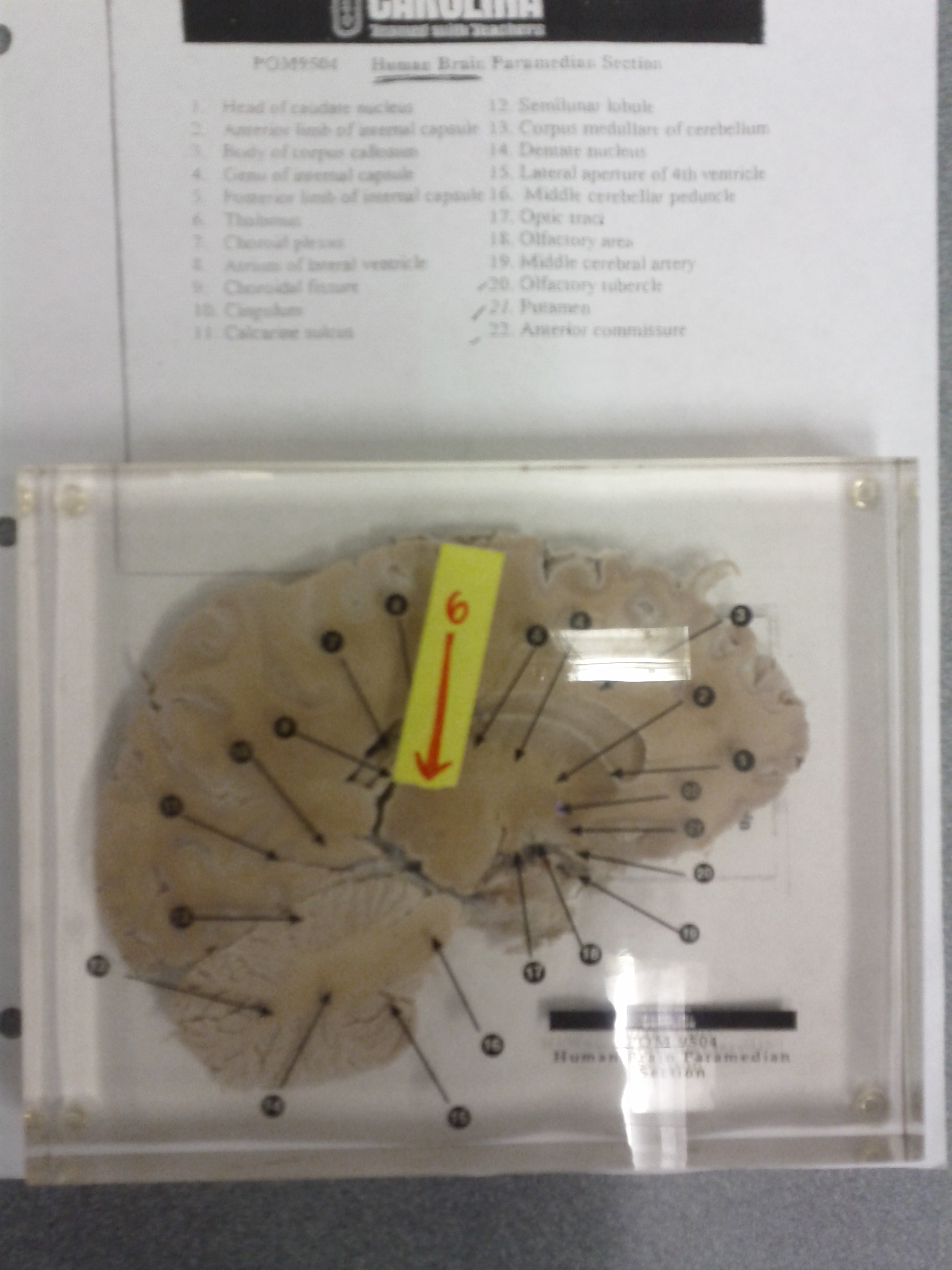
Picture of brain model

Brain model: somehow seemed fitting for a biology and thinking discussion

I intended this blog posting to be more specific and researched, but life is happening at high speed around me and if I want to make it professional…well it will not get written.

Last week, on the first day of class of an anatomy and physiology course (intended for pre-nursing students), we dedicated some time to a biomolecules review. I use it as a group approach: divide students in groups, assign each group a type of biomolecules: lipids, proteins etc, and ask them to look up 4 pieces of information: chemical composition, simplified diagram of structure, cellular localization, and function. After 15-20 minutes they input the info to a big table on the whiteboard, and then we discuss as a class- or should I say: I go over the table expanding and clarifying issues.

This is something I have done many times and I am familiar with the types of challenges and misconceptions that come up. So I was surprised to see one I had never seen before: for cellular localization of monosaccharides (simple sugars), particularly glucose, the group wrote mitochondria. I blinked.

In case you are not a biologist: this is a connection that at the same time makes and does not make sense. I asked the student how did they get the idea, and he said they figured out that simple sugars are cellular fuels, and that in another section of the book it said that the energy collected from glucose is harvested in the mitochondria. Ergo, glucose is present in mitochondria.

Indeed, those two pieces of information are correct separately. However, glucose does not really make it to the mitochondria (not as part of that particular process, at least): it is degraded outside the mitochondria in another process, and one of the intermediate products is the one that enters the mitochondria. Moreover, simple sugars do not tend to be associated to a specific place in the cell- as fuel molecules, they are usually taken up or released and used quickly. There is a dynamic nature to where simple sugars are present (usually briefly), and this is part of the whole idea of localization. Some cellular components have set places, others move around. A seemingly simple question suddenly acquired multiple layers of complexity that are not easy to convey in a short time frame.

On a side note: I was observing what students were doing to find the information. A few of them were thumbing through the paper textbook. Many had the book as an ebook on their laptops or tablets, and were doing word search. A large proportion of the students were doing google searches on their smartphones.

I see this a lot- students put together pieces of isolated information to arrive to a conclusion. The pieces sometimes sound similarly or seem to be related, and often students jump to the conclusion that they are related, or one derives from the other. And that scares and frustrates me.

I think that as a science educator, I am not alone feeling often helpless when faced by the lack of critical thinking skills in student populations. Honestly, I do not know or remember how I acquired my critical thinking skills. I know I have them, but I do not recall anybody explaining them to me. And very often, when foraying into educational sites I find myself confused by the ed lingo.

After that class, I had a long chat with an instructional technology and education expert, and we talked about critical thinking and the Socratic method. I will write more about some specific ideas she gave me about how to make memorization more engaging, or how to prod students through questions to arrive to conclusions.

Still thinking about this, suddenly an image came back to me from a distant past. I am in third year of college: it is our Biochemistry I class at the Faculty of Biology of the University of Havana. We are a relatively small group now: maybe 50 students. Two years of relentless Calculus, Physics, and Chemistry have withered (weeded out, as some professors bluntly say) our group from their original 150.

picture of Faculty of Biology, University of Havana, Cuba

Faculty of Biology, University of Havana, Cuba

Professor Joaquin Diaz Brito is walking us through gkycolysis and Krebs cycle. This is pre-Powerpoint time, and this is Biochemistry, so he is writing each step with the corresponding structures on the blackboard, and we are taking notes. Hours pass as we grind through each and every reaction, enzyme, inhibitors, activators. We get to the end of it and we see the circle on the board, and the reactions starting from glucose, winding down all the way to carbon dioxide and water. We sit back with a sigh of relief. It makes sense. We get it.

Joaquin turns around, his eyes twinkling.

“Now think about this- what happens if the reactions go backward?”

We look. The static drawing on the board starts spinning, as suddenly we see the arrows going on reverse. It is a magical moment that I clearly remember after decades, when metabolism became alive in front of my eyes.

We groan. And we love it. We love Joaquin for the magic of the cell, suddenly revealed.

I need to know how to do this for my students.

Gracias, profe. You just gave me some ideas.

(while writing this, I turned to the internet. I unearthed some article references and links, but the one that warmed my heart was this one, reporting on Prof. Joaquin Diaz Brito’s teaching achievements. )

Back after a long absence…

4 Comments

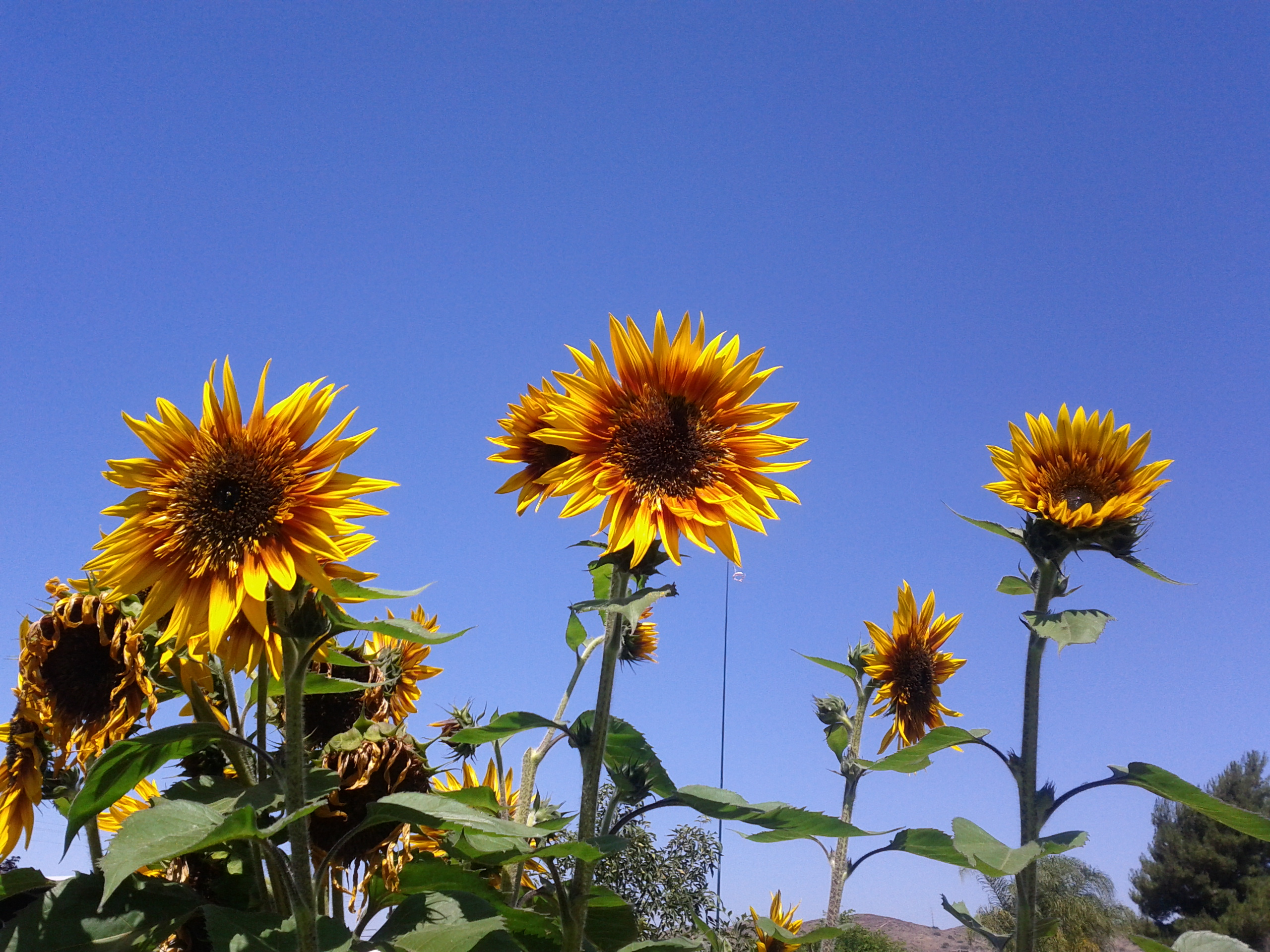
image of sunflowers

Summertime.

I have been away for quite a while. After my rewarding and exciting molecular/cell biology courses I threw myself into moving, both geographically and symbolically. The difference between sunny San Diego and sunny Orange County is not huge, but the one between being a freelancer/consultant/higher ed professional and a full time professor is quite remarkable.

Some years ago I talked to a friend of mine, a “up-to-his-eyeballs” busy professor. He mentioned he basically volunteered to participate in some kind of strategic planning committee. When I expressed surprise that he would dedicate his valuable time to such an endeavor, he replied that he saw a chance to “get things done.”

Well, getting things done sounds easier than it is in reality. For the past month, my first in the position, most of my time has been dedicated to matters unrelated to teaching. I spend hours writing and replying to emails. I spend lots of time talking to people. Funnily enough, I spend quite a time interviewing people.

I am immensely grateful in hindsight to all (or almost all) my former supervisors. I feel also blessed that my life has carried me through different cultures (academia, private industry, education) in different parts of the world. All that experience is serving me well.

I bow my head to the supervisors who taught me how to write politically correct emails with copies to strategically chosen parties. I am grateful for the corporate experience where I learned how to schedule my life through Outlook, and for the recent long-distance collaboration that flowed seamlessly with the help of Google tools. And my deepest appreciation goes to those who trained me, the former breezy postdoc, to be strict about lab safety and management.

Today is a good day. My next posting will be about an incredibly inspiring conversation I had with my cubicle neighbor, an educational technology expert. In less than one hour I got so many ideas that I can’t wait to implement.

But I had the chance for this conversation because I finally finished a Best Practices document whose writing I was assigned to organize, found a couple of new promising adjuncts to teach Spring courses, found a sub for a September Saturday, wrote a guide for todays’ lab, posted grades, ordered textbooks for a variety of courses, RSVPd to several activities…should I go on?

But I hope to start having fun now!


Home Microbiome- Day 0

Leave a comment

I consider Twitter the social media tool that has been most useful for me. It is not only a real time pulsating (and often distracting) flow of news and information, but also a way to make professional and casual connections. And lately, those virtual conversations have started to show tangible results. From tweetups where you get to meet in real life those people you have been talking to (and often feel you have known for quite a while), to exchange of information, and in extreme cases, to a freezer.

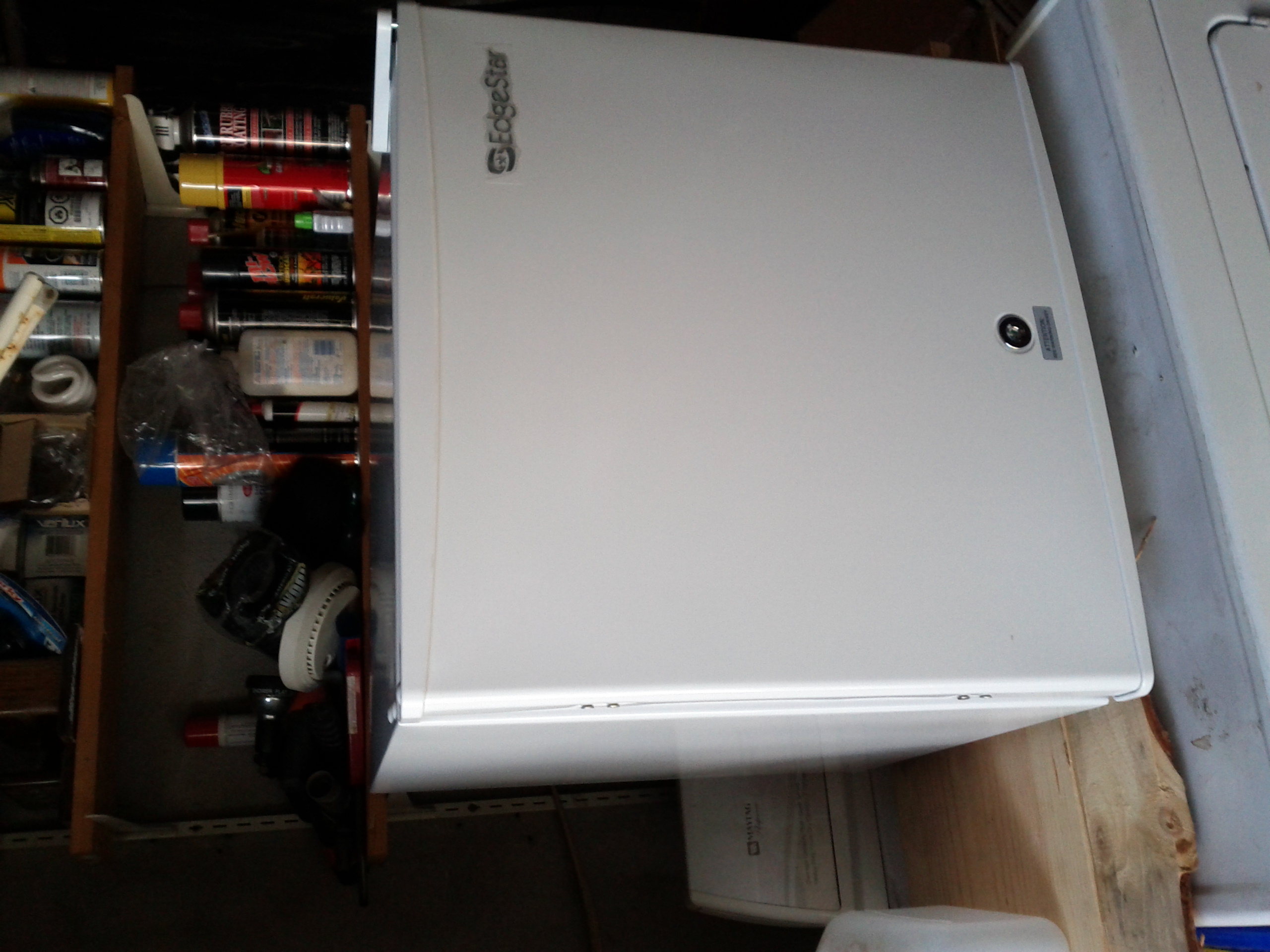
image of a mini freezer

The mini freezer, sitting in the garage

This freezer is part of the Home Microbiome Project, of which you can read here. How did it happen?

Well, of course everything starts with me being an instructor of (among other things), microbiology.  The past years have been exciting in micro, and the fun thing is that the breakthroughs in research have filtered rather quickly to the general public, including students.  I am not sure if it is a general phenomenon related to the availability fo information, or is it that bugs are so interesting- probably a combination of both. The case is that I follow some of the science stuff going on in micro, and one of the threads is the whole microbiome concept. My main interest is still the human microbiota and how it affects health and disease; but still, when I read the word microbiome I usually pay attention. Add Twitter. There are several very active tweeps who are involved with microbiome studies, among them @gilbertjacka, and I became aware of his Home Microbiome project, in which they follow the microbial populations of a home and people before and after a move.  That project sounded really exciting, and when two months ago I got a new position that involves a move, I asked if the study was still going. Not long afterward, a box full with Falcon tubes containing swabs and a bunch of paperwork arrived. Some days later, the freezer made entrance, and was ceremoniously placed in an honorary place in the garage. It has been plugged in for a while, and it seems to work well. 

I am writing this just after midnight. I just activated the gizmos that will record environmental data, and sorted the tubes for early morning’s first swabbing. Two humans and a cat getting swabbed for 6 weeks, every two days. This is so cool.

I guess it is just a geek thing. In my distant past, in places where regulations were not tight, my blood cells became controls of many experiments. Even now, every iteration of a blood lab I volunteer for smears and blood group tests. I have swabbed my wallet, cell phone, and skin at countless micro labs and looked with amazement at the little Staphs growing on the plates.

Anyway, it is day 0 today. The cat has been sneezing, hope he is not getting sick. Hope the microbes filtering from the micro course I will be teaching next week will not upset our microbial ecosystem.

Swab on!

Poisson and Guinness

Leave a comment

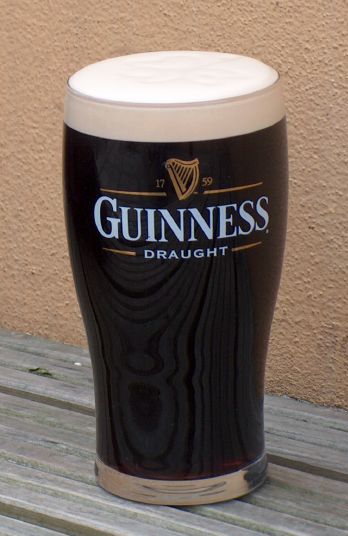
picture of Guinness beer

Guinness Beer (By Sami Keinänen (www.flickr.com) [CC-BY-SA-2.0 (http://creativecommons.org/licenses/by-sa/2.0)%5D, via Wikimedia Commons)

The title of Chapter 25 of Zar is Testing for Randomness. Which sounds pretty philosophical.

Definition of random distribution can be applied to objects (each portion of space has the same probability of containing an object, and the occurrence of one does not influence the occurrence of the other), events in time (substitute space for time, and object for event), or periods of time.

The Poisson distribution is important in describing random occurrences when their probabilities are small.

A practical application of this distribution was made by Ladislaus Bortkiewicz in 1898 when he was given the task of investigating the number of soldiers in the Prussian army killed accidentally by horse kick; this experiment introduced the Poisson distribution to the field of reliability engineering.

(Copying here shamelessly from wikipedia): The Poisson distribution arises in connection with Poisson processes. It applies to various phenomena of discrete properties (that is, those that may happen 0, 1, 2, 3, … times during a given period of time or in a given area) whenever the probability of the phenomenon happening is constant in time or space. Examples of events that may be modelled as a Poisson distribution include, among others, the number of yeast cells used when brewing Guinness beer. This example was made famous by William Sealy Gosset (1876–1937).

This interesting fact made me digress from Poisson long enough to learn about Gosset, who seems to be a very interesting character. From Tales of  Statisticians:

Gosset earned a degree in chemistry at Oxford, and joined the Guinness brewery firm in 1899. His work for Guinness led him investigate the statistical validity of results obtained from small samples (previous statistical theory had concentrated instead on large samples). He took a leave of absence to spend 1906/1907 studying under Karl Pearson at University College, London. His publications in Pearson’s journal Biometrika were signed “Student,” not because of a Guinness company policy forbidding publication, as is often said, but more precisely because of a company wish to keep secret the fact that they were gaining an industrial advantage from employing statisticians. Gosset’s most important result is known as the “Student’s t” test or distribution, published in 1908.

Returning to Poisson_ still working on it, but found some pointers.

You will have a variable “x” which is what your random variable is,

then u is the average success (divide n by X)

and you have to use the constant e in your calculations

Poisson Formula. Suppose we conduct a Poisson experiment, in which the average number of successes within a given region is μ. Then, the Poisson probability is:

P(x; μ) = (e) (μx) / x!

where x is the actual number of successes that result from the experiment, and eis approximately equal to 2.71828.

Life became much simpler when I found an online calculator.


To be continued…

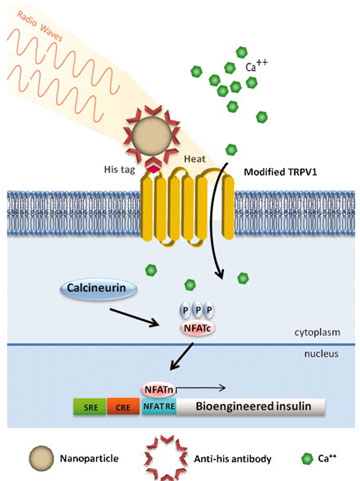
BioTechniques – Remote-Controlled Gene Expression

Leave a comment


BioTechniques - Remote-Controlled Gene Expression

BioTechniques – Remote-Controlled Gene Expression.

To Keep Yourself Healthy: Brush, Floss, and Measure Your Microbes Daily?

2 Comments

To Keep Yourself Healthy: Brush, Floss, and Measure Your Microbes Daily?.


Very interesting!

Science blogs

2 Comments

a painting by Artologica, showing themes from biology

Exploration 1, by Artologica

Today I ran across a Twitter posting by Paul Knoepfler ‏ @pknoepfler: Professors who blog: academia’s love hate relationship with social media http://bit.ly/JFzB2R @phylogenomics @pzmyers

It was retweeted by Jonathan Eisen (aka @phylogenomics, one of the most engaged and social media-savvy scientists I am aware of). The blog posting by Dr. Knoepfler, a known stem cell researcher, decried the low number of professors who blog. As it happens when somebody posts about a relevant and controversial issue, the comments were as interesting to read as the original post. I hope you will visit it- it has a lot  to do with how “official” science looks with suspicion on side-activities such as blogging, writing, or even outreach- we are talking now of research-intensive universities, where teaching is a distraction and it is number of publications and grants that count in the pursuit of the Holy Grail = tenure.

I got distracted enough to follow the trail of comments and links for almost an hour. One thing that bothers me a lot about academia (and here I talk about high octane, research intensive institutions) is their disconnect from real life and real people. Science writers and bloggers do a lot to make science understandable to non-specialists (and by this I mean both non-scientists or scientists from another speciality), and this is an effort that should be applauded and encouraged. Science funding comes from many sources, and it is just fair that people should understand where their money is going to. Not to mention that we scientists need to make science interesting so young people want to go into science. We are already seeing the anti-science backlash in the climate change and vaccine deniers.

Going back to blogging, I was happy to see a new posting about reader recommended science bloggers, and already checked out some. Check this out also: the best science writing of 2012, in Amazon.

And, keep writing your blogs, please. This is not only a class assignment, it is also a reflection of your journey into deeper science, an online portfolio of your thoughts and interactions with others, and maybe a vehicle that will help your career.

Cloning assignment

Leave a comment

Here is an example of the submission for the cloning assignment.

I keep working with my old friend human TNF.

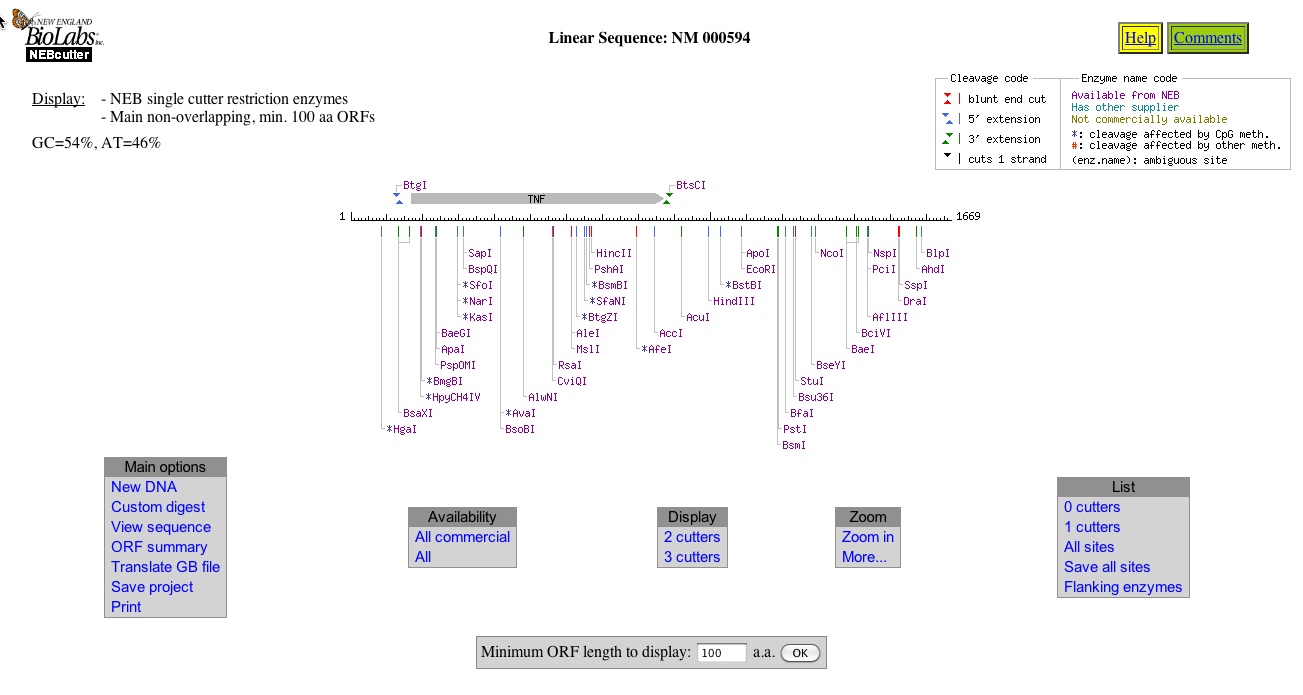
picture showing the results of a restriction mapping of TNF

Restriction mapping of TNF

This is the restriction map obtained using Nebcutter. I can submit the figure, or alternatively I can save the list as a .txt file by using the List function (only 1 cutters). However I will spare you the long list, as none of those sites is useful for me.

The vector I am interested in is the p-CLIP vector. This is a vector that has a CLIP tag, and one can insert the gene of the protein of interest either before or after the tag, so that means that one can have the protein tagged either at the N or at the C terminal. This can be  useful for many reasons, but in the case of TNF, as it is cleaved closer to the N-terminus from the proform to the soluble form, either tagging could give information fo what happens to either product.

Here is the official description:

pCLIPf Vector is a mammalian expression plasmid intended for the cloning and stable or transient expression of CLIP-tag® protein fusions in mammalian cells. This plasmid encodes CLIPf, a CLIP-tag protein, which is expressed under control of the CMV promoter. The expression vector has an IRES (internal ribosome entry site) and a neomycin resistance gene downstream of the CLIPf for the efficient selection of stable transfectants. pCLIPf Vector contains two multiple cloning sites to allow cloning of the fusion partner as a fusion to the N- or C-terminus of the CLIPf.

The CLIP-tag is a novel tool for protein research, allowing the specific, covalent attachment of virtually any molecule to a protein of interest. The CLIP-tag is a small polypeptide based on human O6-alkylguanine-DNA-alkyltransferase (hAGT). CLIP-tag substrates are derivatives of benzyl cytosine (BC). In the labeling reaction, the substituted benzyl group of the substrate is covalently attached to the reactive cysteine of CLIP-tag forming a stable thioether link.
pCLIPf contains an improved version of CLIP-tag, termed CLIPf. CLIPf displays faster kinetics in in vitro labeling and fast, specific and efficient labeling in live and fixed cell applications, thereby rendering it a desired research tool for analysis of protein dynamics.

And this is the map:

figure showing the cloning vector's genetic map

p-CLIP vector

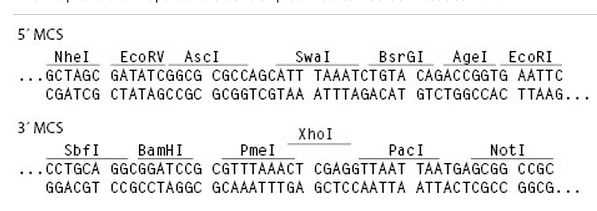
I am interested in following the cleaved soluble TNF, so I will use MCS-1 to insert the sequence (that way the CLIP tag will be on the C-terminus). Here are the enzymes involved:

restriction sites of the MCS1 of the pCLIP vector

Restriction sites of the MCS1 of the pCLIP vector

 I run the Primer Blast and I get several recommendations for primers. At the first try it will give me a pair within the sequence, so I have to set a range of 140-200 and 890-940 for the forward and the reverse primers, respectively.The primers provided by the program were:

Forward primer  1    CTCCACCCTCTCTCCCCTGGA  21
Template        140  …………………  160
Reverse primer  1    ATTGGGGCAGGGGAGGCGTT  20
Template        916  ………………..  897

(Practical observation: restriction enzymes are expensive, so most labs will have a modest collection of the “workhorses,” which are such as EcoRI, BamH1, Xho1, HindIII, and some more. So often your decision as to which enzyme to buy will depend largely of which are already in the lab freezer. EcoRI was a no-brainer for one of the sites, and I chose EcoRV because it was a short sequence and easy to insert.)

PCR primers: Forward: GATATCTCCACCCTCTCTCCCCTGGA (with EcoRV site in bold)

                           Reverse: GAATTCATTGGGGCAGGGGAGGCGTT (with EcoRI site in bold).

Note: in real life I would have probably added some more bases just in case before the restriction sequence, and would have run some simulation runs in a software to optimize the primers’ parameters regarding length and added sequences.

Older Entries Newer Entries

CUREing Ocean Plastics

STEM education exploring ocean plastic pollution

about flexible, distance and online learning (FDOL)

FDOL, an open course using COOL FISh

Main Admin Site for the WPVIP multisite

This multisite hosts public sites for Parse.ly and WordPress VIP

#Microjc

An Online Summer Book Club of Science

barralopolis

Teaching and learning reflections around science education

Disrupted Physician

The Physician Wellness Movement and Illegitimate Authority: The Need for Revolt and Reconstruction

The Blog of Author Tim Ferriss

Tim Ferriss is the author of five #1 New York Times bestsellers and host of The Tim Ferriss Show podcast.

Here is Havana

A blog written by the gringa next door

Storyshucker

A blog full of humorous and poignant observations.

Jung's Biology Blog

Teaching biology; bioinformatics; PSMs; academia, openteaching, openlearning

blogruedadelavida

Reflexiones sobre asuntos variados, desde criminologia hasta artes ocultas.

Humanitarian Cafe

Think Outside the Box

Small Pond Science

Research, teaching, and mentorship in the sciences

Small Things Considered

Teaching and learning reflections around science education

1 Year and a 100 Books

No two people read the same book